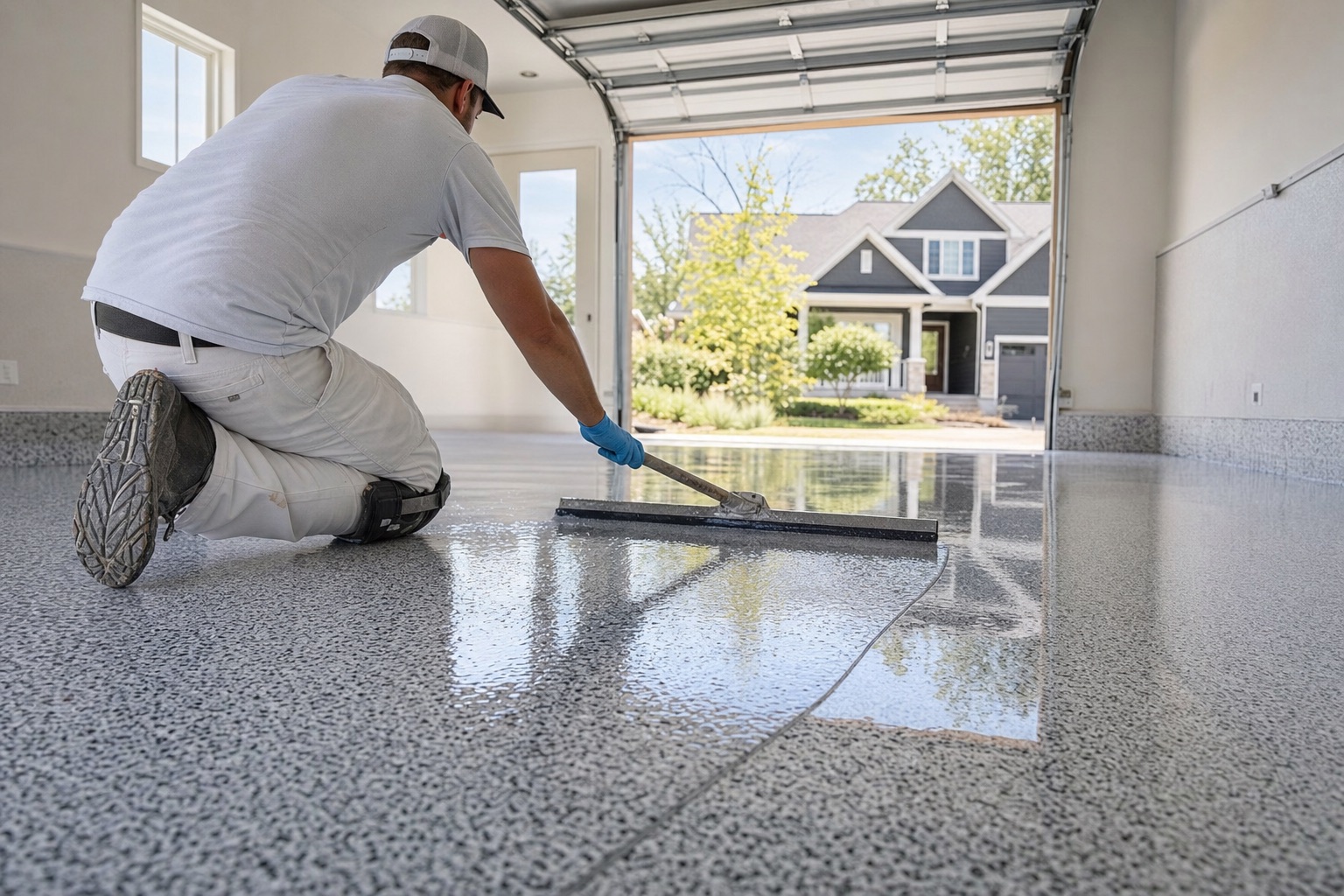
Does Epoxy Garage Flooring Peel or Yellow?
Yes, epoxy can peel or yellow — but almost always for two preventable reasons: weak surface prep and UV exposure. Here's why it happens and how a proper install avoids both.
Honest quote in about 24 hours. No pressure.
Local crew · Diamond-grind prep · Workmanship warranty
Epoxy can peel or yellow, but almost always for two preventable reasons: the concrete was acid-washed instead of diamond-ground (peeling), or a non-UV-stable epoxy got direct sun (yellowing). A professionally installed garage floor epoxy that is ground and finished with a UV-stable topcoat resists both for 15–20+ years.
Updated June 2026Why Does Epoxy Peel Off a Garage Floor?
When an epoxy floor peels, flakes, or lifts in sheets, it is almost never the epoxy's fault — it is what happened (or didn't happen) before the coating went down. A properly installed coating bonds into the concrete and stays there for 15–20+ years. A floor that peels was set up to fail at the prep stage.
There are really only a few reasons a coating lets go, and every one of them is preventable. Here are the big ones.
Skipped or Weak Surface Prep
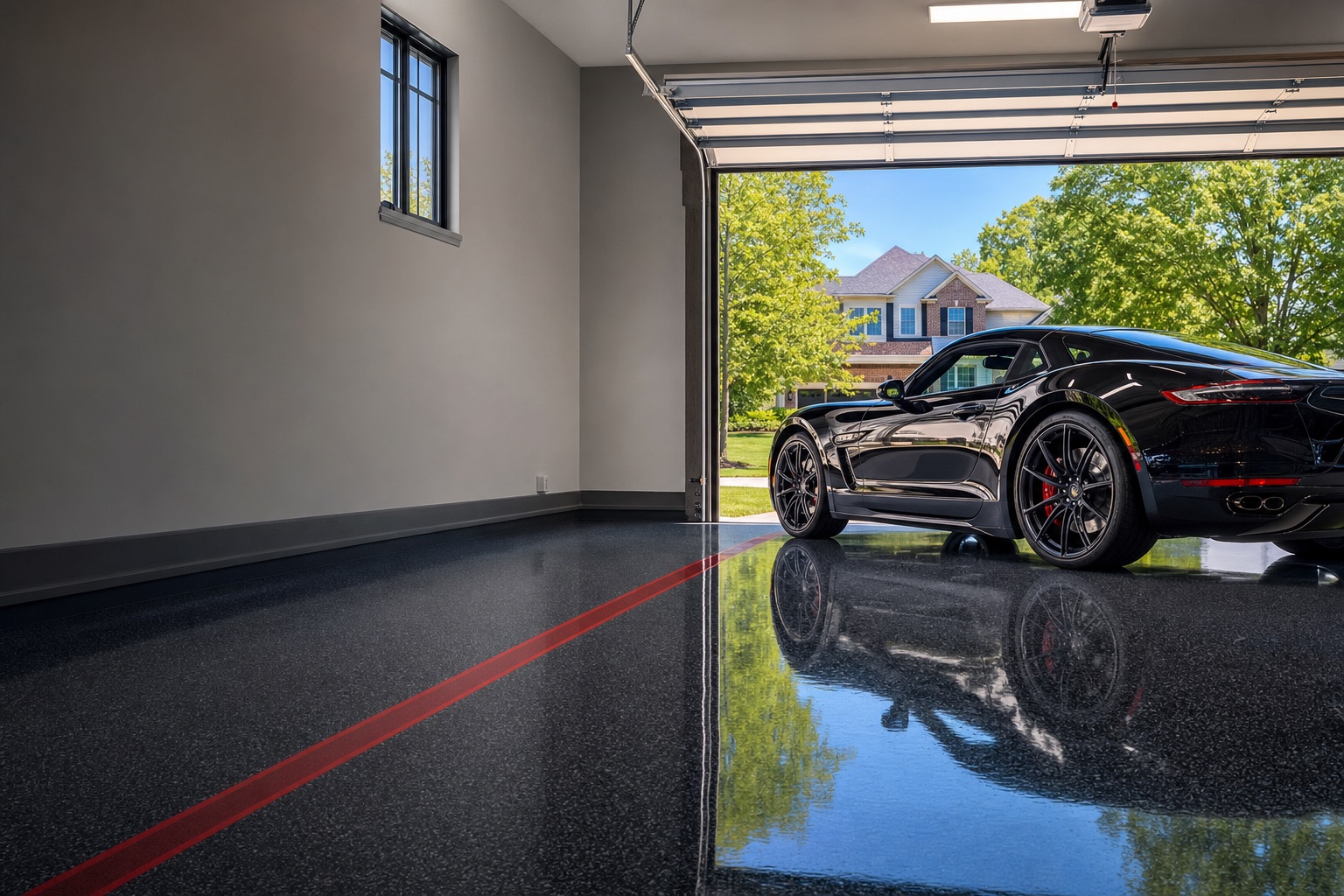
This is the number-one reason epoxy peels. To bond, the coating needs a clean, open concrete profile — and the only reliable way to get that is to mechanically diamond-grind the slab. Acid washing (etching) is the cheap shortcut a lot of installers and DIY kits use, and it simply doesn't open the surface the same way. The epoxy sits on top instead of biting in, and a season later it starts lifting.
The fix is not complicated, it is just labor: we diamond-grind every floor to a proper profile so the coating bonds for good. That is the single biggest reason a professionally installed floor lasts years instead of peeling in months.
Moisture and Hot-Tire Pickup
Slab moisture. Concrete over DuPage County clay soils can push moisture and vapor up through the slab. If that's not tested for and handled with a vapor primer, the pressure pops the coating off from underneath — you get bubbling and blisters that turn into peeling. A quick moisture test before anything goes down prevents it.
Hot-tire pickup. When tires heat up on the highway and then sit on a thin or poorly bonded coating, they can literally pull the epoxy off the floor as they cool and grip. This happens to cheap DIY single-coats — not to a properly ground, full-thickness professional system rated for hot tires.
Why Does Epoxy Turn Yellow?
Yellowing is a different problem with a different cause: UV exposure. Standard epoxy resin isn't UV-stable, so when sunlight hits it — through an open garage door, a window, or out on a patio — it slowly ambers and hazes. It's a cosmetic failure, not a bond failure, but it's why an old clear-epoxy floor can look dingy and yellow over time.
The fix is the topcoat. A UV-stable polyaspartic topcoat is engineered specifically not to yellow in the sun. That's why, for most Naperville garages, we build a hybrid: an epoxy base coat for thickness and adhesion, sealed with a polyaspartic top that holds its color.
Epoxy Failures: Cause and Prevention
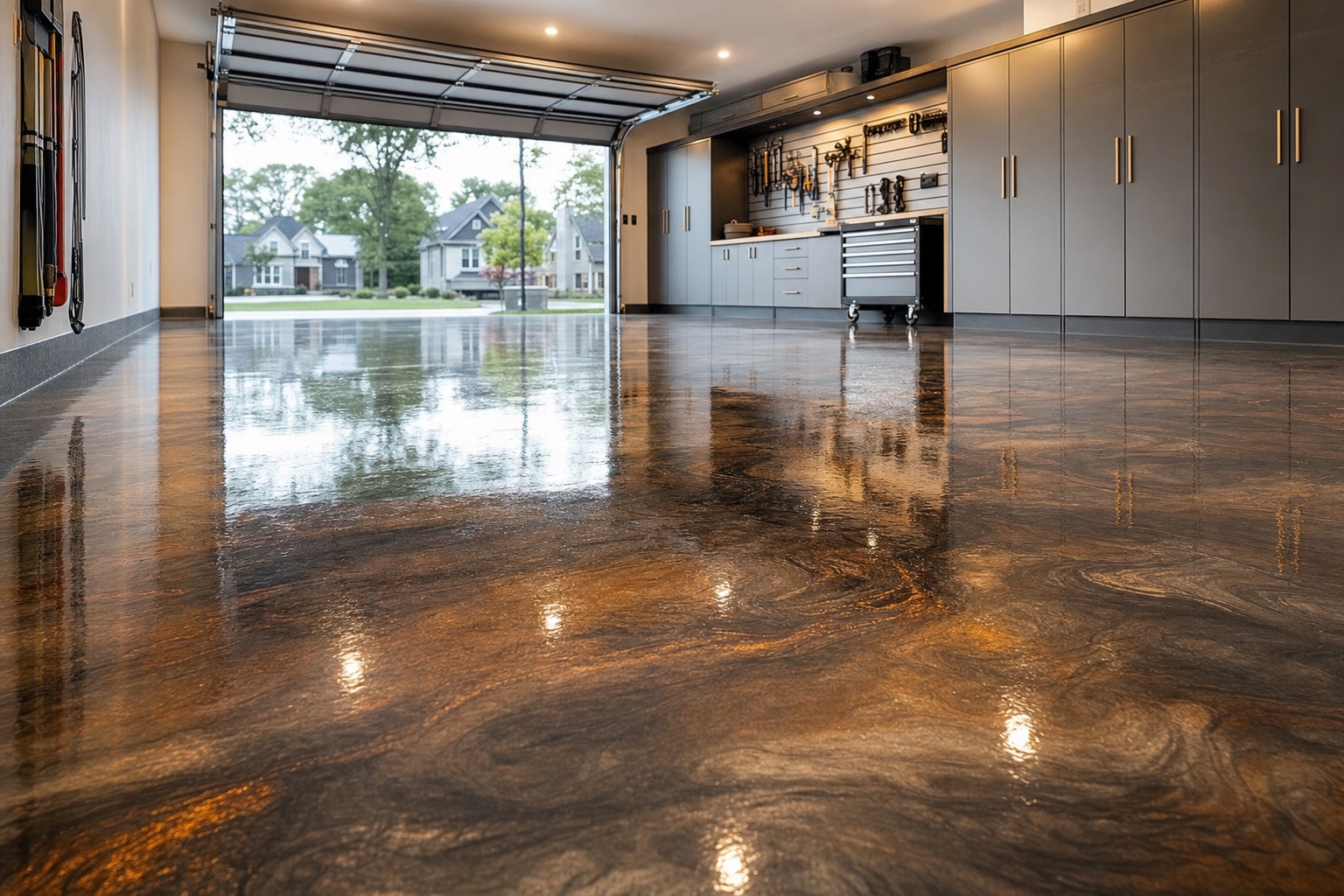
Every common epoxy failure traces back to a specific, preventable shortcut. Here's what actually causes each one — and how a proper install stops it.
| Problem | Real cause | Prevention |
|---|---|---|
| Peeling / flaking | Acid wash or no grinding | Diamond-grind to open the pores |
| Bubbling | Slab moisture not tested | Moisture test + vapor primer |
| Yellowing | UV + non-stable resin | UV-stable polyaspartic topcoat |
| Hot-tire lifting | Thin DIY coat | Proper mil thickness, pro system |
Notice the pattern: none of these are the epoxy's fault — they're prep and system choices. See how we handle each step on our garage floor epoxy page.
How a Proper Install Prevents Both
Peeling and yellowing are both solved in the same place: a real prep-and-system process. Here is what makes a floor last instead of fail:
Diamond-grind prep opens the concrete so the coating bonds in — that's what beats peeling. A moisture test and vapor primer stop bubbling from below. Proper mil thickness across a full multi-coat system resists hot-tire pickup. And a UV-stable polyaspartic topcoat seals it all in and keeps the color from ambering. Get those four right and a floor holds its finish for 15–20+ years through Illinois winters.
Can a Peeling or Yellow Floor Be Saved?
Usually, yes — and almost always without tearing out the concrete. For a peeling floor, we grind the failed coating back to a sound surface, repair any cracks or pits, and rebuild it with a properly bonded epoxy-and-polyaspartic system. For a yellowed floor, the slab is often fine — it just needs to be re-prepped and recoated with a UV-stable topcoat that holds its color.
Either way, we start with a free on-site look and an honest assessment of what your slab actually needs. We have restored plenty of failed and 20-year-old Naperville garage floors this way.
Keep Reading
More on getting a garage floor that actually lasts in Illinois.
FAQ
Peeling & Yellowing FAQ
Free, No-Pressure Estimate
Worried About a Floor That Peels or Yellows?
Whether you're planning a new floor or fixing one that's failing, tell us about your garage and we'll send an honest, detailed estimate — usually within about 24 hours.
(630) 326-6456 · Open 7 days · 8am–5pm
1750 W Ogden Ave, Naperville, IL 60540
Honest quote in about 24 hours. No pressure.
Local crew · Diamond-grind prep · Workmanship warranty