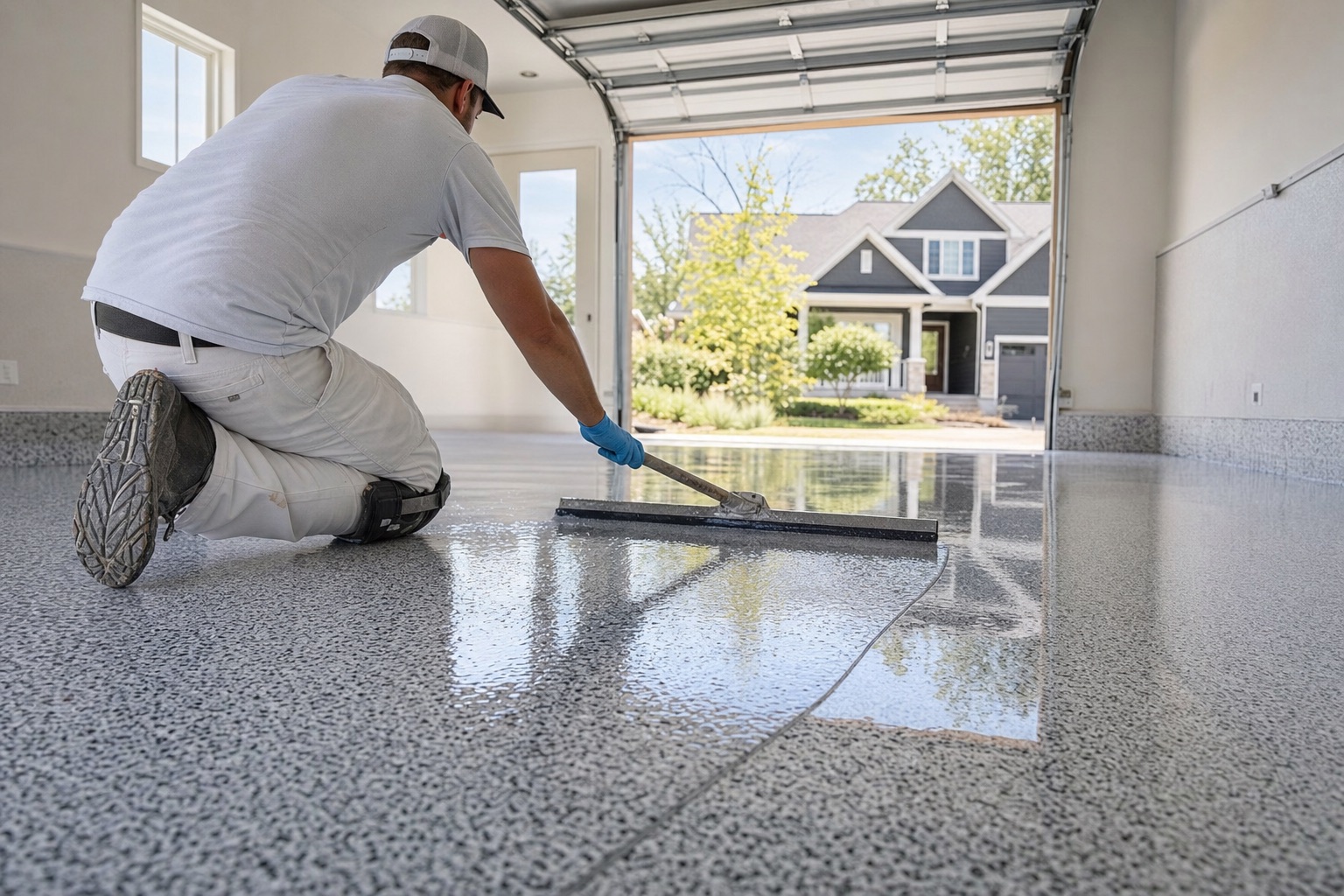
Can You Epoxy a Garage Floor in Winter in Illinois?
You can coat a garage floor through an Illinois winter — just not with every product. Heat the slab, run a moisture test, and finish with fast-cure polyaspartic.
Honest quote in about 24 hours. No pressure.
Local crew · Diamond-grind prep · Workmanship warranty
Yes — you can coat a garage floor through an Illinois winter, but not with every product. Standard epoxy struggles below ~50°F, so pros switch to fast-cure polyaspartic/polyurea, heat the slab, and run a moisture test first. With a heated garage and the right system, winter epoxy garage floor coating in Naperville cures fully and lasts just as long.
Updated June 2026Can You Really Epoxy a Garage Floor in Winter?
Yes. A cold Illinois winter does not rule out a garage floor coating — it just rules out doing it the lazy way. The catch is that concrete coatings cure by a chemical reaction, and that reaction slows down (or stops entirely) when the slab gets cold. So the real question isn't can you, it's how.
A good crew controls three things in winter: the slab temperature, the moisture in the concrete, and the product they use. Get those right — usually a heated garage plus a fast-cure polyaspartic system — and a January floor cures fully and lasts every bit as long as one installed in July.
What Temperature Does Epoxy Need to Cure?
Most standard two-part epoxies are formulated to cure with the slab and air around 50–60°F or warmer. Below that threshold the resin gets thick and sluggish, the reaction crawls, and you can end up with a soft, tacky, or never-fully-hard floor.
Why standard epoxy fails in the cold
Cold concrete is the enemy of a clean cure. As temperature drops, epoxy viscosity climbs — it stops self-leveling and won't wet into the ground profile the way it should. Push it too cold and the coating may stay gummy for days or cure with a hazy, weak surface that's prone to peeling later.
How polyaspartic solves the cold-cure problem
Polyaspartic and polyurea coatings are the winter workhorses. They cure far faster than epoxy and many formulations are rated to go down at much lower temperatures — some well below freezing. They also set in hours, not days, so a heated garage doesn't have to stay warm for half a week. Here's why polyaspartic wins in cold weather.
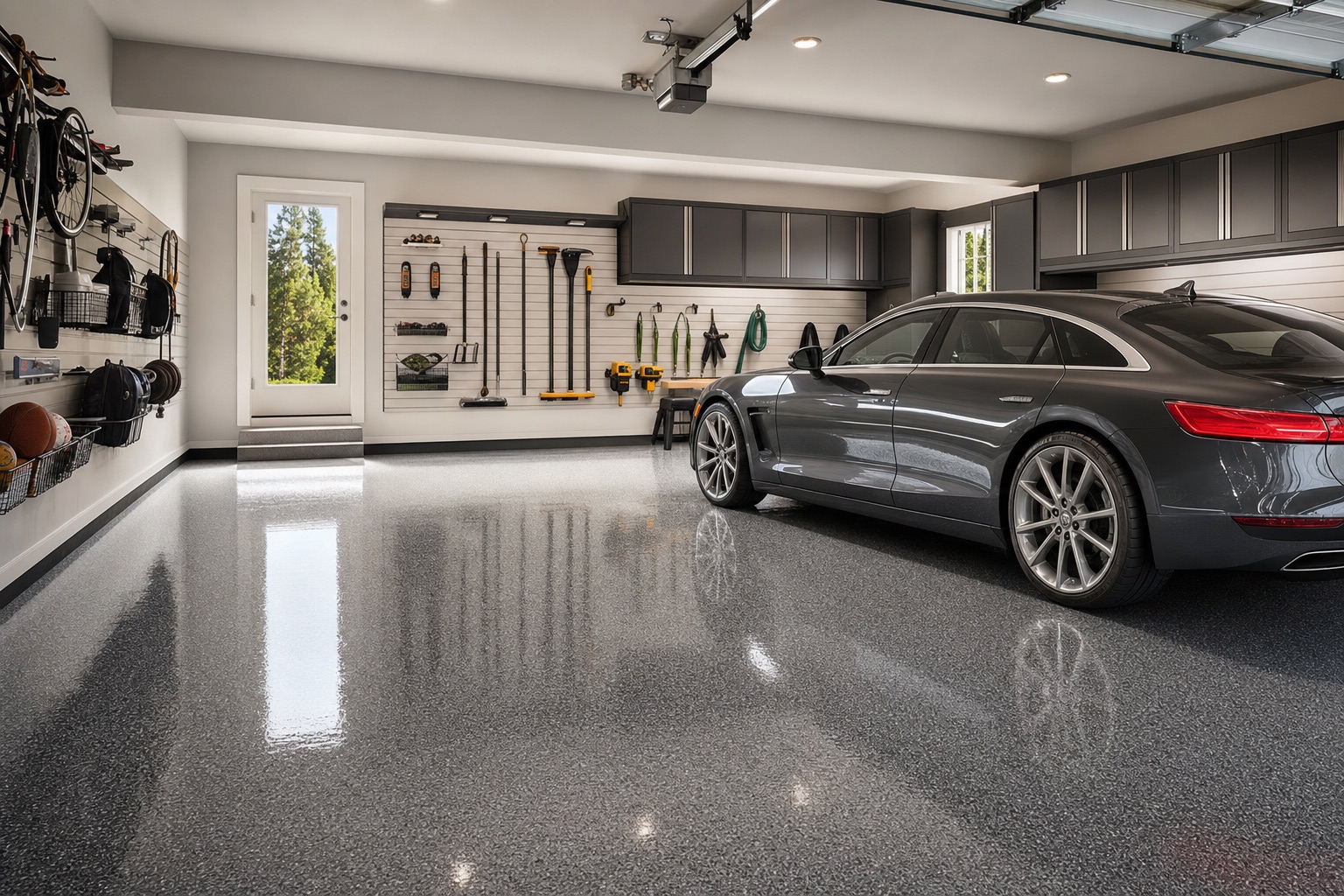
How a Pro Does It
The Winter Install: 5 Steps That Make It Work
A winter garage floor isn't a different floor — it's the same system installed with cold-weather discipline. Here's how a pro handles an Illinois January slab.
Confirm the Slab Can Hold Heat
We verify the garage can be held around 55–65°F at the slab — bringing in temporary heaters if the space isn't already heated. Cold concrete is the #1 reason winter coatings fail.
Run a Moisture Test
A calcium-chloride or relative-humidity test on the slab catches trapped moisture and vapor — a real concern over DuPage clay soils — before anything goes down.
Diamond-Grind the Concrete
We mechanically grind the surface to an open profile. No acid wash in winter — etching residue won't flash off in the cold, and grinding bonds far better anyway.
Apply a Cold-Tolerant Base
A cold-rated epoxy base or polyaspartic primer goes down onto the warmed, prepped slab — chosen specifically for the temperature it has to cure in.
Finish With Fast-Cure Polyaspartic
A UV-stable polyaspartic topcoat seals everything in. It sets in hours, not days, so the floor is back in service fast even in deep winter.
Should You Wait Until Spring?
Sometimes waiting is the smart call — and we'll tell you straight. If your garage has no heat and no way to add temporary heat, or the slab is soaked from melting snow tracked in all winter, forcing a coating down in those conditions is how you get a floor that peels by spring.
But for a heated or heatable garage, winter is a perfectly good time to coat — and often a quieter, faster-to-schedule one. The freeze-thaw, road salt, and chloride that chew up Illinois garage slabs don't take the winter off, so sealing the concrete sooner protects it sooner. The deciding factor is always whether we can control the slab temperature, not the calendar.
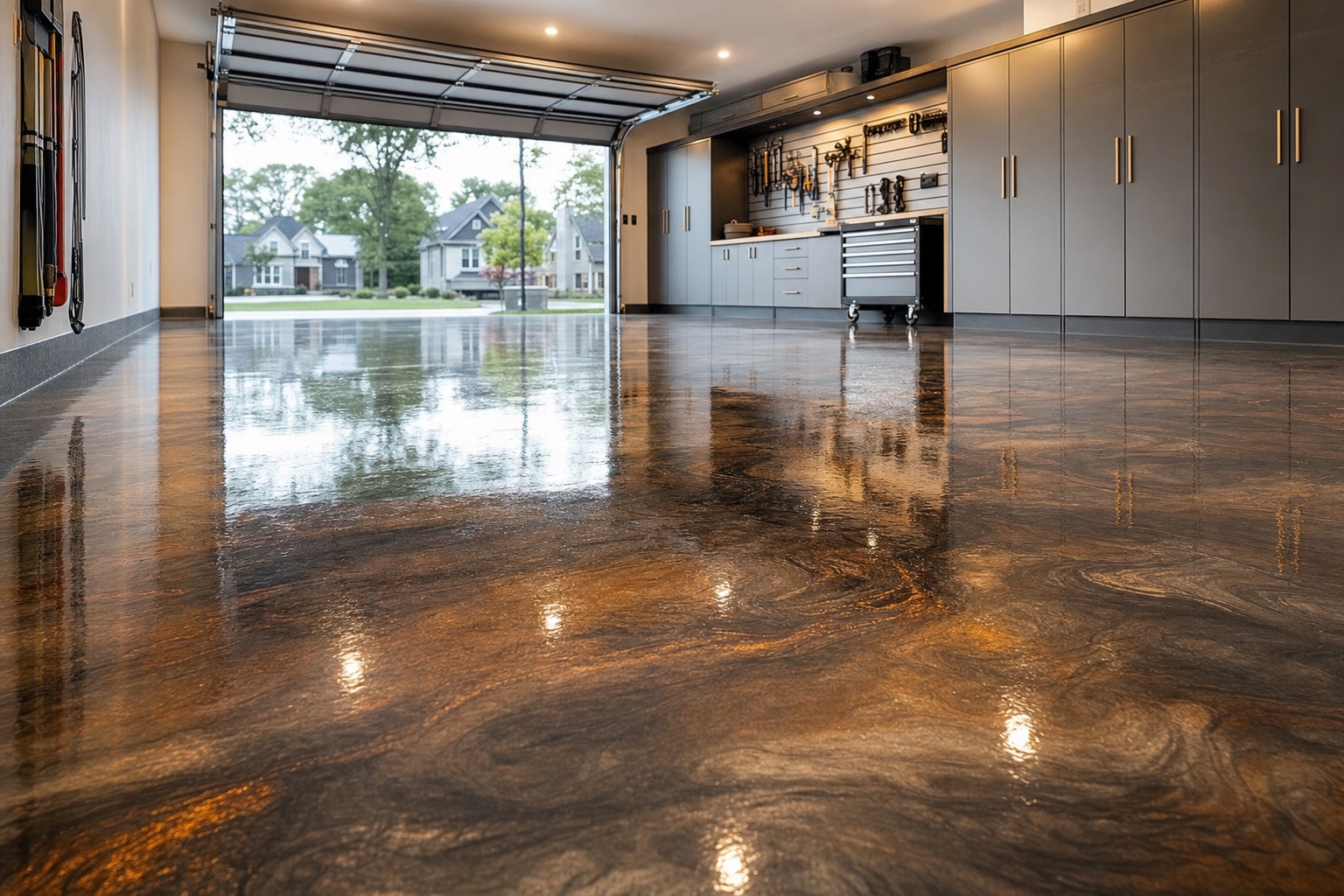
Standard Epoxy vs. Polyaspartic in Cold Weather
Why the product choice matters so much once the temperature drops.
| Factor | Standard epoxy | Polyaspartic / polyurea |
|---|---|---|
| Min. install temp | ~50–60°F slab | Much lower — some below freezing |
| Cure speed | Days (slower when cold) | Hours, even in cold |
| Cold-weather risk | Soft, tacky, hazy if too cold | Reliable cure with slab heat |
| UV stability | Can yellow | UV-stable, won't yellow |
| Best winter role | Cold-rated base coat | Topcoat — and cold-weather workhorse |
Typical product behavior, not a spec sheet for any one brand. Want the full breakdown? See epoxy vs. polyaspartic.
Keep Reading
More on getting a garage floor that lasts through Illinois winters.
FAQ
Winter Epoxy FAQ
Free, No-Pressure Estimate
Get a Free Winter Garage Floor Estimate in Naperville
Tell us about your garage — heated or not — and we'll tell you straight whether to coat now or wait, then send an honest, detailed estimate, usually within about 24 hours.
(630) 326-6456 · Open 7 days · 8am–5pm
1750 W Ogden Ave, Naperville, IL 60540
Honest quote in about 24 hours. No pressure.
Local crew · Diamond-grind prep · Workmanship warranty