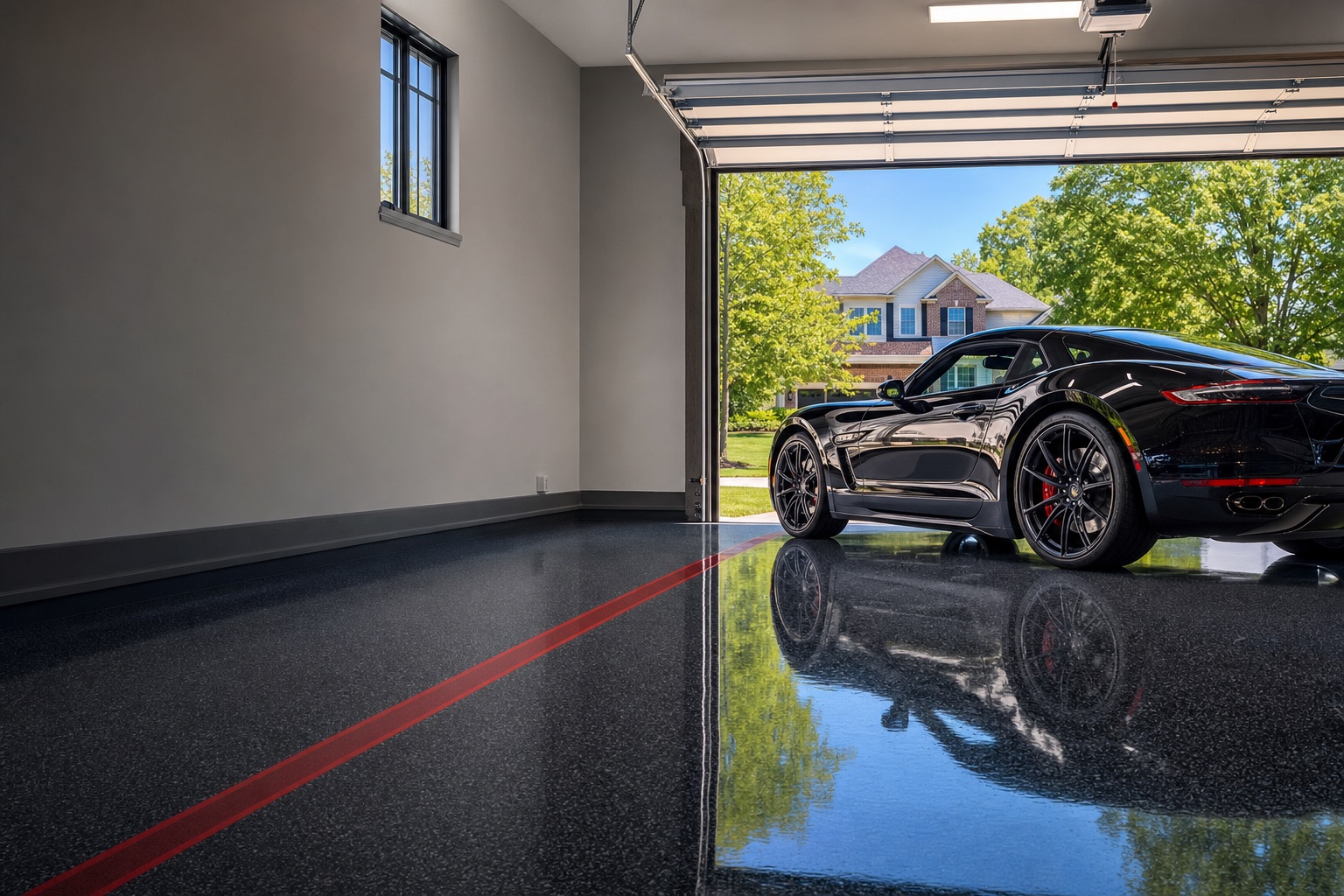
Epoxy vs. Tile vs. Polished Concrete: Best Garage Floor?
A Naperville installer compares the three most common garage floor options on durability, cost, and how each one handles Illinois road salt and freeze-thaw.
Honest quote in about 24 hours. No pressure.
Local crew · Diamond-grind prep · Workmanship warranty
For most Illinois garages, a professional epoxy/polyaspartic coating wins on durability and salt resistance for the price. Interlocking tile is easiest to DIY but can trap moisture; polished concrete is ultra-durable but offers less stain protection and traction. The best choice depends on budget, traffic, and how much your garage sees road salt.
Updated June 2026Epoxy vs. Tile vs. Polished Concrete — The Short Answer
If you want the fastest answer: for a daily-driver Naperville garage that sees road salt every winter, a professional epoxy/polyaspartic coating is the best all-around floor. It bonds into the slab as one sealed surface, shrugs off salt and oil, and you can dial in grip with flake or quartz.
Interlocking tile is the easy DIY pick — it snaps together with no grinding — but the seams can trap moisture and salt, and tiles can shift under hot tires. Polished concrete is extremely durable and low-maintenance, but it offers less stain protection and can be slick when wet. Below we break down exactly where each one wins and loses in an Illinois climate.
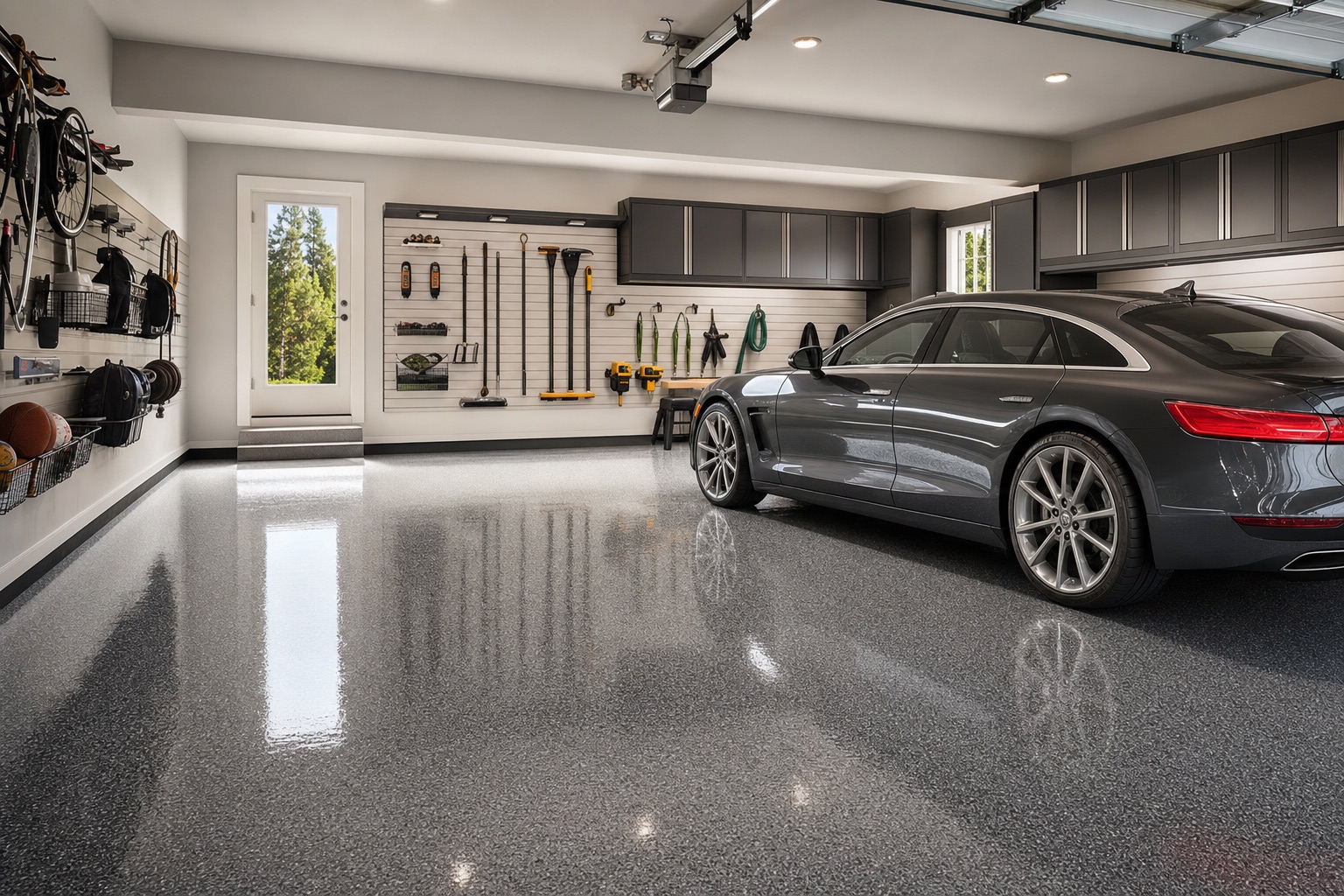
Epoxy vs. Tile vs. Polished Concrete (Side-by-Side)
How the three garage floor options compare on the factors that matter most in Illinois. The extractable summary, then the detail below.
| Factor | Epoxy / polyaspartic | Interlocking tile | Polished concrete |
|---|---|---|---|
| Typical lifespan | 15–20+ yrs | 10–15 yrs | 20+ yrs |
| Salt / stain resistance | Excellent | Moderate | Fair |
| Traction options | Flake/quartz add grip | Built-in texture | Can be slick |
| DIY-friendly | No (needs grinding) | Yes | No |
| IL freeze-thaw | Excellent w/ topcoat | Moisture-trap risk | Good |
Lifespans assume a professional install. A DIY epoxy kit on un-ground concrete lasts far less. For real price ranges by system, see epoxy floor cost in Naperville.
Durability and Salt Resistance in Illinois Winters
This is where the Illinois climate decides a lot of the answer. Every winter your garage floor sees the same brutal cycle: cars track in chloride-heavy road salt, meltwater puddles on the slab, and the concrete freezes and thaws over and over. That mix is what slowly pits, dusts, and cracks an unprotected floor.
A sealed epoxy/polyaspartic coating handles it best because it bonds into the diamond-ground slab as one continuous, sealed surface — salty water sits on top and wipes away instead of soaking in. Polished concrete holds up well structurally but stays more porous, so it can absorb stains and salt over time. Interlocking tile is the weak link here: its seams let salty meltwater seep down to the bare slab underneath, which is exactly where freeze-thaw damage starts.
Cost and Installation Time
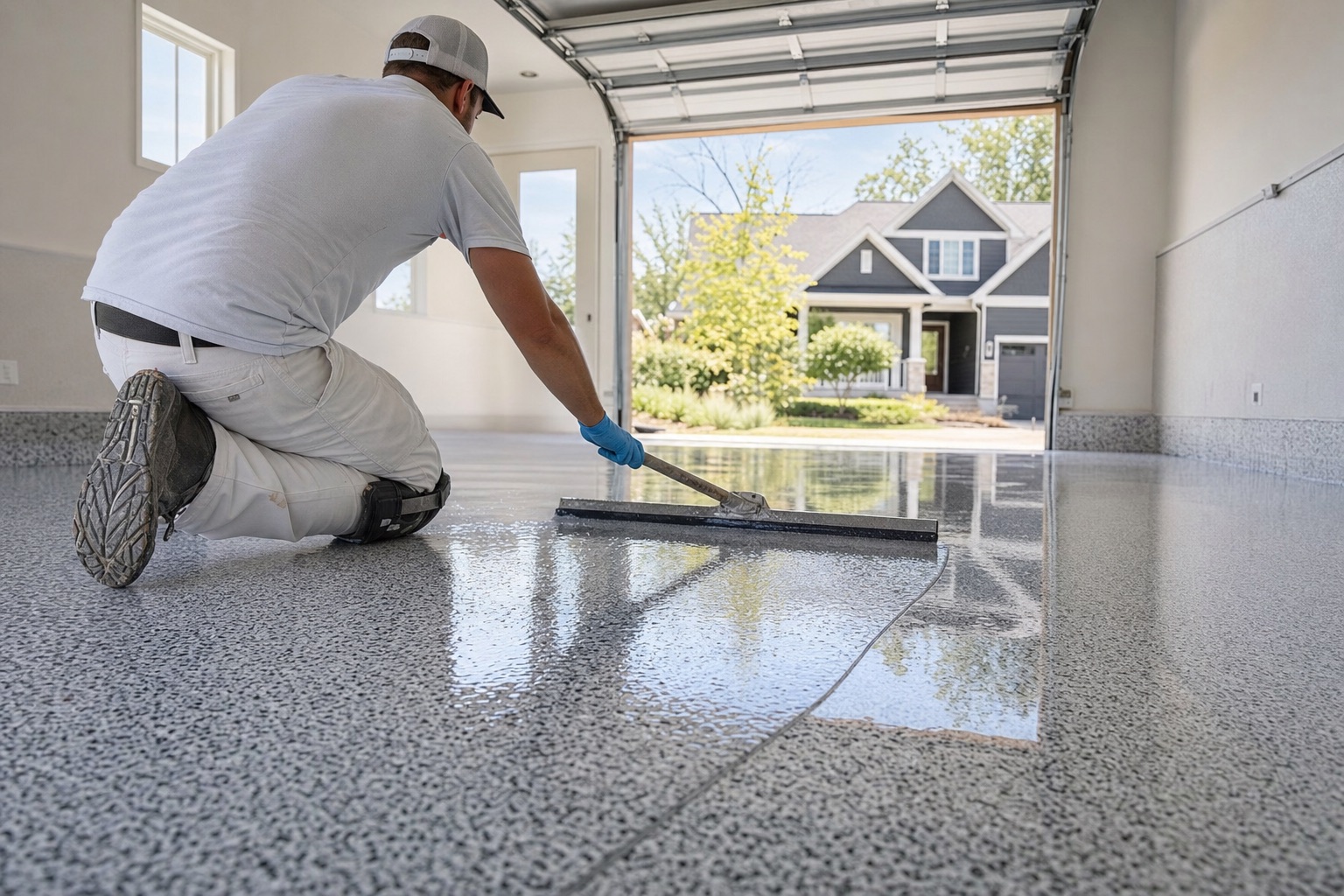
All three are real projects, but they differ in effort. Interlocking tile is the cheapest and fastest if you do it yourself — tiles snap together over the existing slab in an afternoon, no grinding required. The catch is that you're paying for convenience, not longevity.
Epoxy and polished concrete both require professional diamond grinding, which is the step that makes them last. A typical two-car epoxy garage is usually installed in about a day once prep is done. Polished concrete takes multiple grinding and densifying passes. Both land in a similar price range depending on your slab — we never post a one-size number because no two floors are the same. See typical epoxy floor cost in Naperville for honest market ranges, not a quote.
Look, Traction, and Maintenance
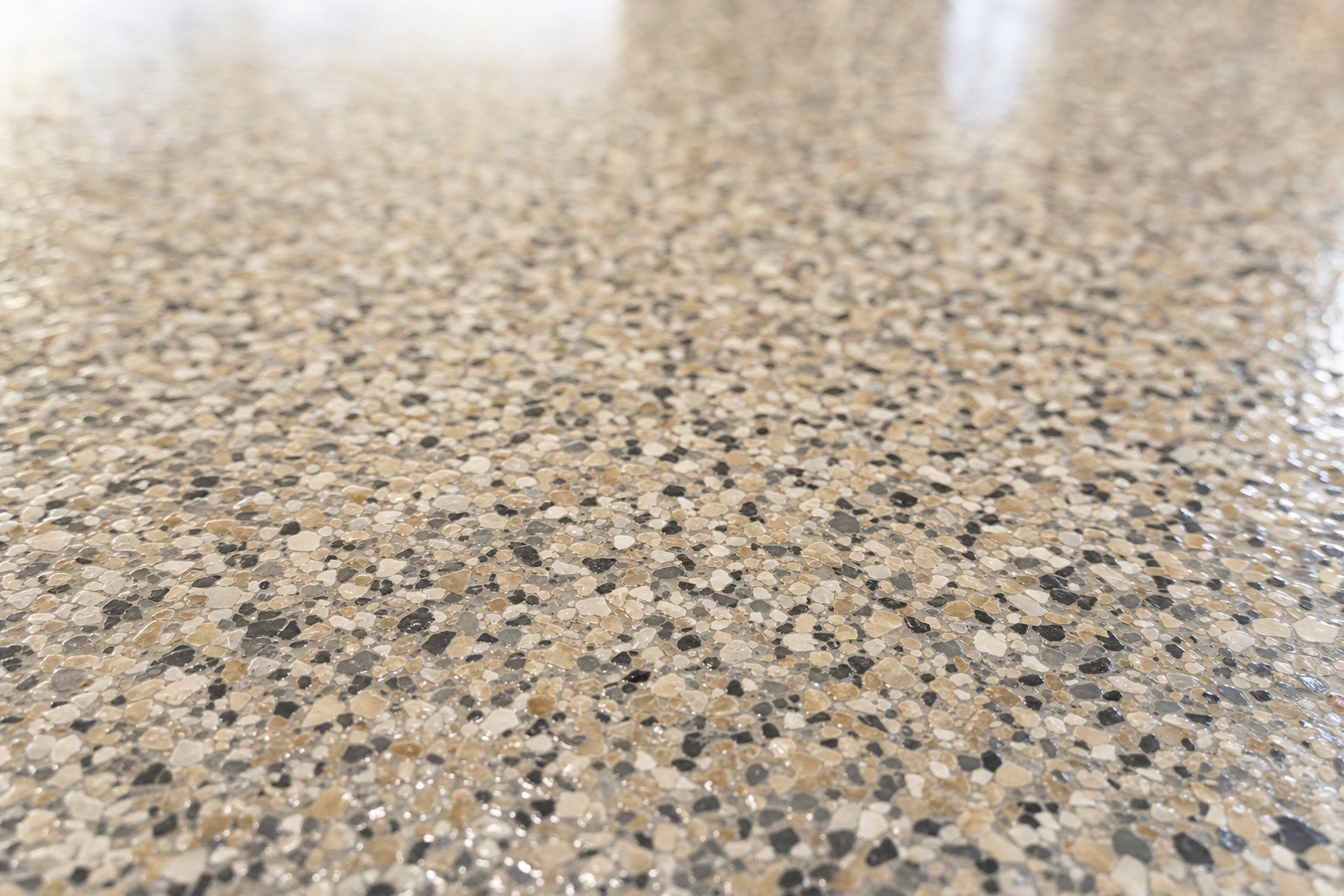
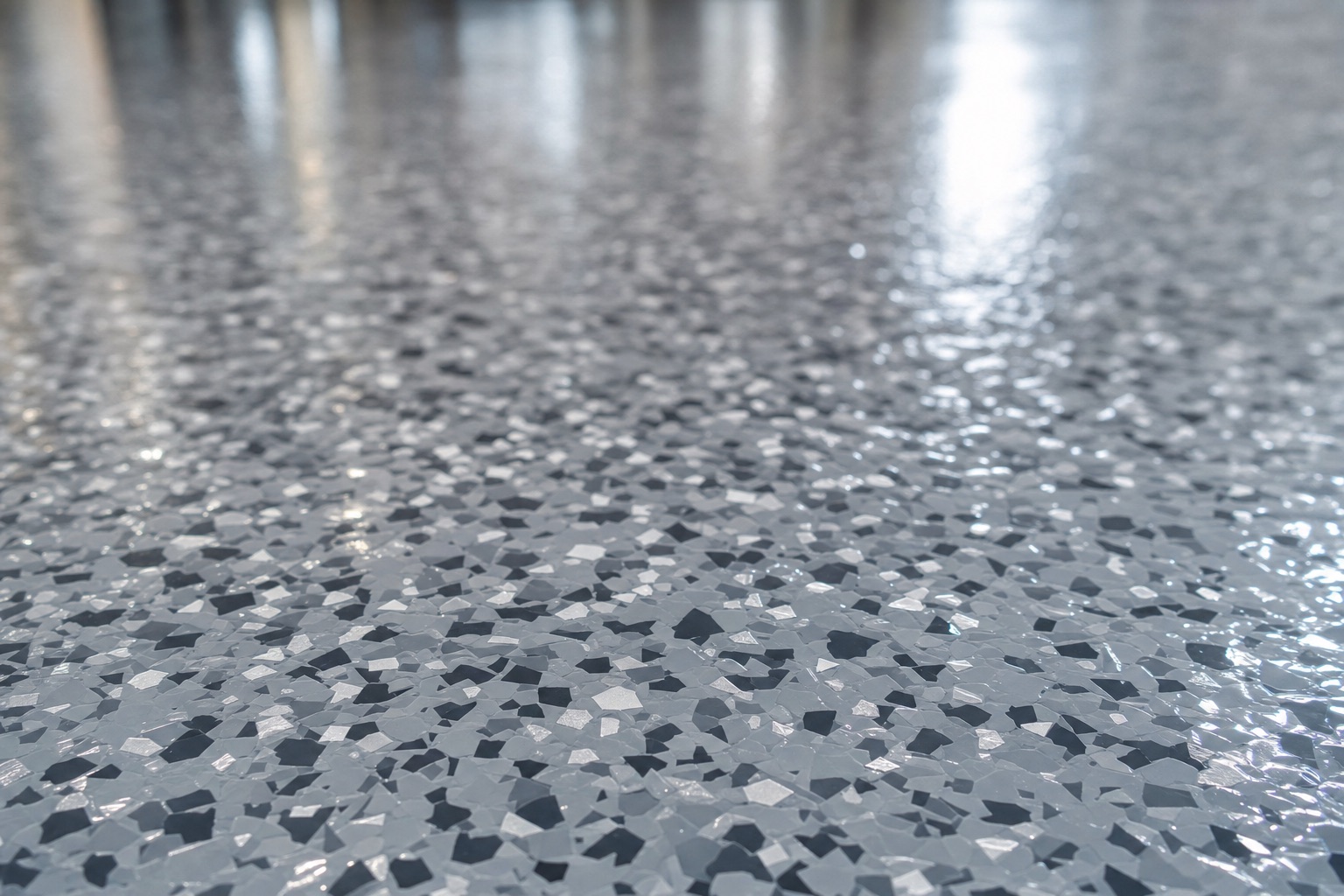
Epoxy gives you the most control over the finished look and feel. You pick the color blend, and you choose how much grip you want — flake (chip) hides flaws and adds traction, while quartz gives maximum slip resistance for wet zones. Cleaning is just a hose-down or mop.
Polished concrete has a sleek industrial look but can be slick when wet unless it's treated, and a glossy floor shows every tire mark. Interlocking tile comes in lots of patterns and has built-in texture, but the seams collect dirt and the look reads more "garage product" than "finished floor." For an everyday Naperville garage, the coating route gives the most finished result with the least upkeep.
Which Should You Choose? (By Use Case)
- Daily-driver garage with IL winters: A professional epoxy/polyaspartic coating. It's the best balance of durability, salt resistance, grip, and a finished look.
- Renter or short-term, want it removable: Interlocking tile. It's DIY, comes up easily, and doesn't commit you to the slab — just know it can trap moisture and salt.
- Industrial / showroom look, low stain worry: Polished concrete. Extremely durable and low-maintenance if staining and traction aren't big concerns.
- Wet zones, workshops, max grip: Epoxy with a quartz or flake broadcast for slip resistance.
Still deciding between coating systems? The follow-up question is usually epoxy vs. polyaspartic — see our epoxy vs. polyaspartic breakdown for which topcoat fits your garage.
Explore Related Pages
Go deeper on the option that fits your garage — each links back to a free estimate.
FAQ
Epoxy vs. Tile vs. Polished Concrete FAQ
Free, No-Pressure Estimate
Not Sure Which Garage Floor Is Right? Ask Us.
Tell us about your garage and how it gets used, and we'll recommend the right floor — and send an honest, detailed estimate, usually within about 24 hours.
(630) 326-6456 · Open 7 days · 8am–5pm
1750 W Ogden Ave, Naperville, IL 60540
Honest quote in about 24 hours. No pressure.
Local crew · Diamond-grind prep · Workmanship warranty