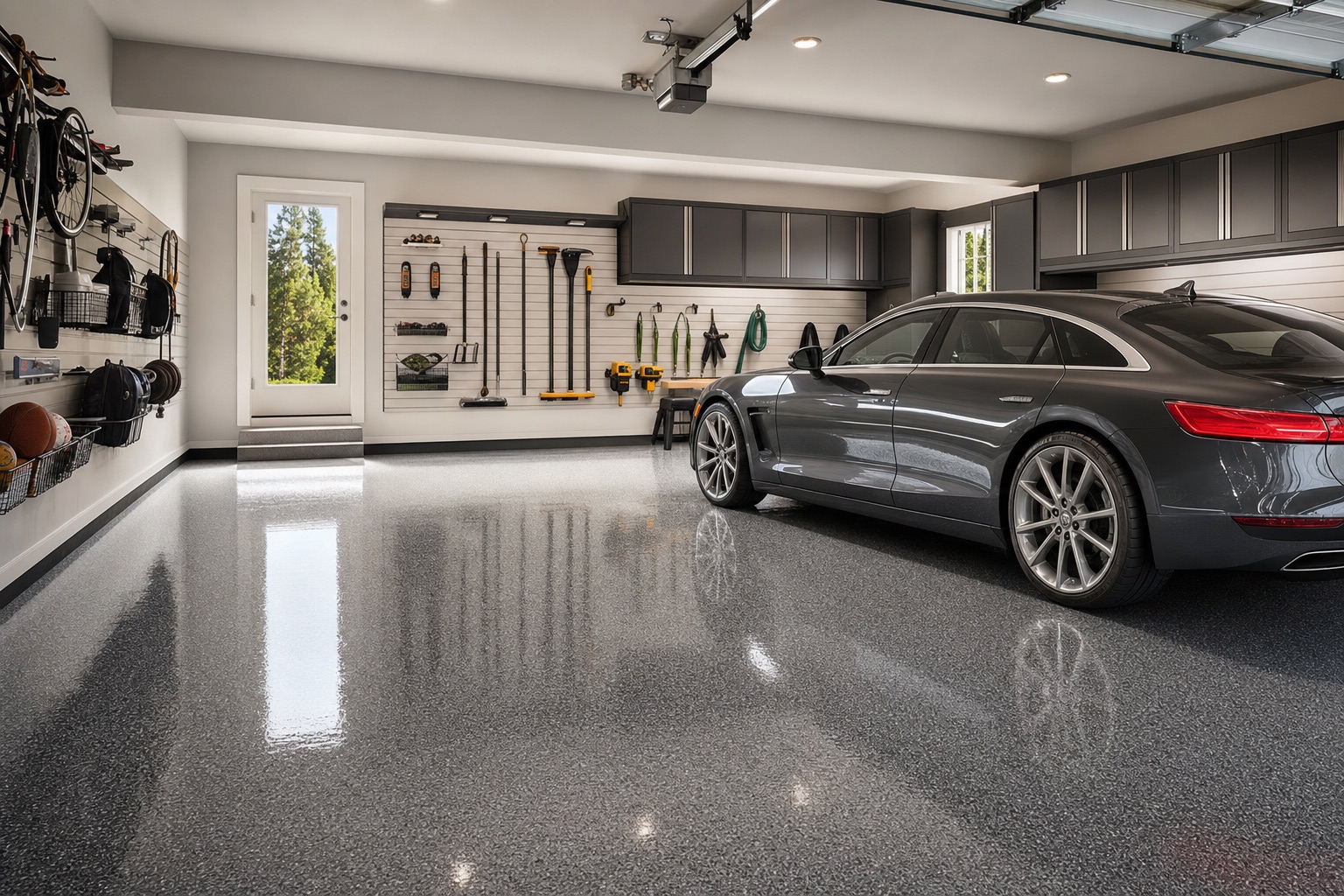
How Long Does an Epoxy Garage Floor Last in Illinois?
A pro-installed epoxy or epoxy-polyaspartic garage floor lasts 10 to 20+ years in Illinois. Prep quality — not the brand of epoxy — is the biggest lifespan factor.
Honest quote in about 24 hours. No pressure.
Local crew · Diamond-grind prep · Workmanship warranty
A professionally installed epoxy or epoxy-polyaspartic garage floor lasts 10 to 20+ years in Illinois when the concrete is diamond-ground first and a UV-stable topcoat is used. DIY kits typically last 3–5 years. The biggest local lifespan factor is prep quality — not the brand of epoxy. See professional garage floor epoxy in Naperville.
Updated June 2026How Long Does an Epoxy Garage Floor Really Last?
It depends almost entirely on how the floor was installed. A professional epoxy or epoxy-polyaspartic garage floor lasts 10 to 20+ years in Illinois — and the hybrid systems on the higher end can outlive that with basic care. A thin DIY kit from a big-box store usually lasts 3 to 5 years before it starts lifting at hot-tire spots and edges.
The single biggest lifespan factor is not the brand of resin — it is the prep. A floor that was diamond-ground, moisture-tested, and finished with a UV-stable topcoat will outlast a "premium" epoxy that was rolled over an acid wash, every time. Below, we break down why the gap is so big and what makes a floor last in an Illinois garage.
Epoxy Garage Floor Lifespan by System
How long each type of garage floor system typically lasts, and what each one is best suited for. Upfront cost tracks with lifespan — see typical numbers in our epoxy floor cost in Naperville guide.
| Floor system | Typical lifespan | Best for |
|---|---|---|
| DIY big-box epoxy kit | 3–5 years | Budget, low traffic |
| Pro single-coat epoxy | 8–12 years | Standard garages |
| Epoxy base + polyaspartic topcoat (hybrid) | 15–20+ years | IL freeze-thaw, daily-driver garages |
| Polyaspartic / polyurea | 15–20+ years | Fast cure, heavy use |
Ranges reflect typical real-world results, not a guarantee — every slab is different. For most Naperville garages we build the hybrid system. See the full epoxy vs polyaspartic breakdown.
Professional Install vs. DIY Kit — Why the Lifespan Gap?
The price difference between a DIY kit and a professional floor is real, but the lifespan difference is bigger. A weekend kit is a thin, water-based coating applied over an acid wash, with no crack repair and no UV-stable topcoat. It looks fine for a season, then peels where your hot tires sit and chips at the door edge.
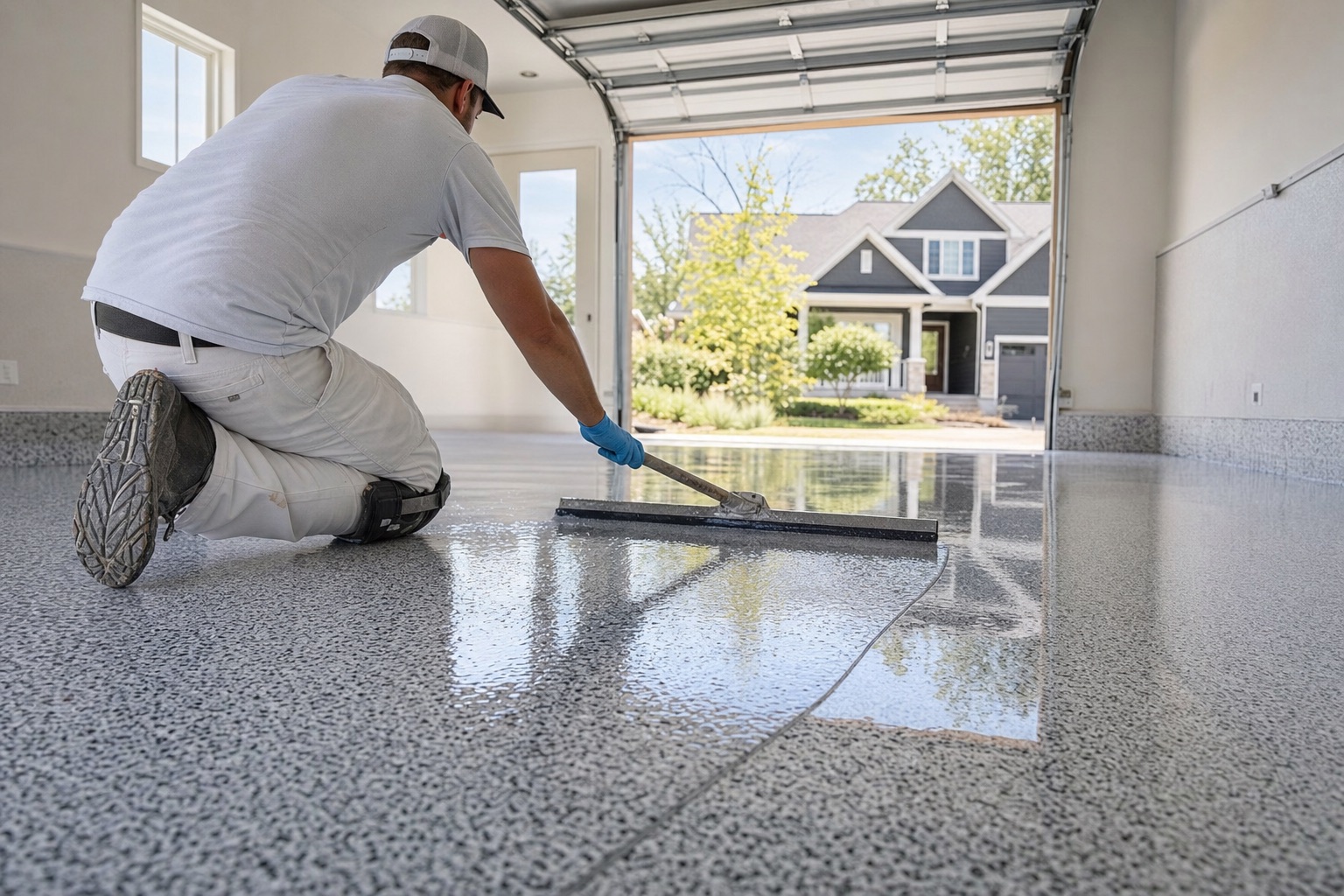
A professional floor is a multi-coat system built on mechanical prep. The concrete is diamond-ground to an open profile, cracks and pits are filled, an epoxy base bonds into the slab, and a polyaspartic topcoat seals it against UV and salt. That is why one lasts 3–5 years and the other lasts 15–20+. The resin matters far less than what happened to the slab before it went down.
What Shortens an Epoxy Floor's Life — and What Extends It
Poor prep (acid wash instead of diamond grinding). This is the number-one reason coatings fail early. An acid etch barely opens the concrete, so the coating never gets a real mechanical bond — it lifts in sheets within a year or two. A diamond grind is non-negotiable for a floor that lasts.
Illinois freeze-thaw and road-salt chloride. Tracked-in salt and chloride sit in puddles and attack an unsealed or cheaply sealed slab, while repeated freeze-thaw cycling works at any weak bond. A properly sealed, diamond-ground floor shrugs this off; a thin DIY coat does not.
Hot-tire pickup and UV yellowing. Hot tires pull at coatings that were not built for them, and straight epoxy can amber in direct sun. A UV-stable polyaspartic or polyurea topcoat solves both — it resists hot-tire pickup and will not yellow. What extends a floor: good prep, crack repair, a UV-stable topcoat, and simple maintenance.
Make It Last
How to Make Your Epoxy Floor Last Longer
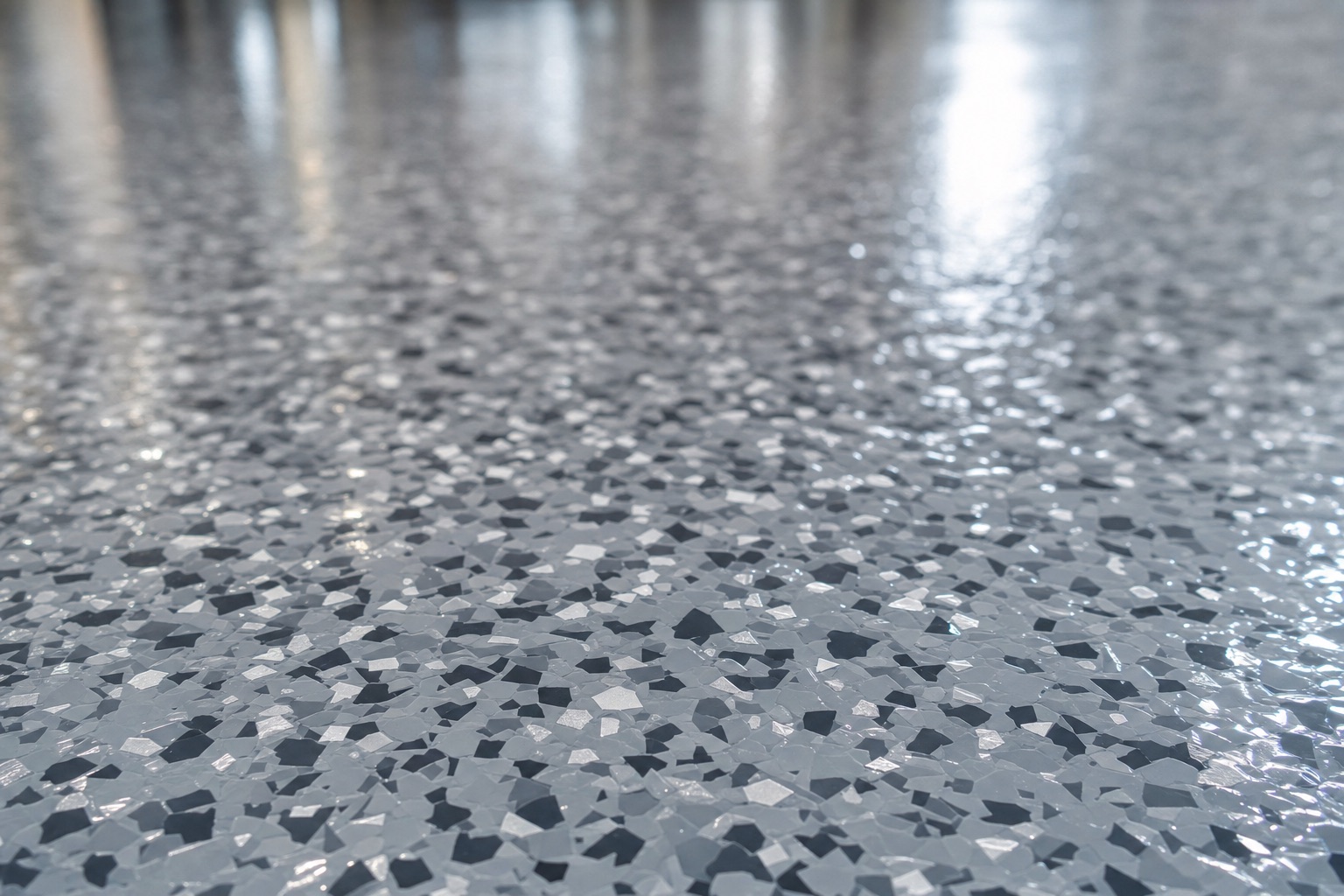
Most of the lifespan is locked in at install. But once you have a properly built floor, a little upkeep keeps it looking new for the full 15–20+ years.
Sweep and dust-mop regularly
Grit acts like sandpaper underfoot and on tires. A quick sweep keeps the topcoat clear and scratch-free.
Rinse off road salt in winter
Hose or mop away tracked-in salt and chloride before it sits and pits. This is the single best winter habit in Illinois.
Wipe spills and oil promptly
A sealed epoxy floor cleans up easily — but the sooner you wipe oil, brake fluid, or chemicals, the better the finish stays.
Use mats under jack stands and heavy loads
Point loads and dropped tools can chip any coating. A cheap mat protects high-stress spots.
Recoat the topcoat before it wears through
When the topcoat starts to dull, a single fresh polyaspartic coat resets the clock — far cheaper than a full rebuild.
When Is It Time to Recoat Instead of Replace?
Good news: most aging epoxy floors do not need to be torn out. If the bond is still sound and the only issue is a dull, worn, or lightly scratched topcoat, a recoat is the answer — we lightly abrade the surface and lay down a fresh polyaspartic topcoat, and the floor looks new again for a fraction of the cost.
A full rebuild only makes sense when the coating is actively peeling, delaminating, or failing from bad original prep — at that point the old layer comes off, the slab is re-ground and repaired, and a proper system goes back down. We will tell you straight which one your floor needs at a free estimate, and you can compare typical numbers in our epoxy floor cost in Naperville guide.
Keep Reading
More on building a garage floor that lasts in the Illinois climate.
FAQ
Epoxy Garage Floor Lifespan FAQ
Free, No-Pressure Estimate
Get an Honest Estimate on a Long-Lasting Garage Floor
Tell us about your garage and we'll send an honest, detailed estimate — usually within about 24 hours. Built with the diamond-grind prep and UV-stable topcoat that make a floor last.
(630) 326-6456 · Open 7 days · 8am–5pm
1750 W Ogden Ave, Naperville, IL 60540
Honest quote in about 24 hours. No pressure.
Local crew · Diamond-grind prep · Workmanship warranty