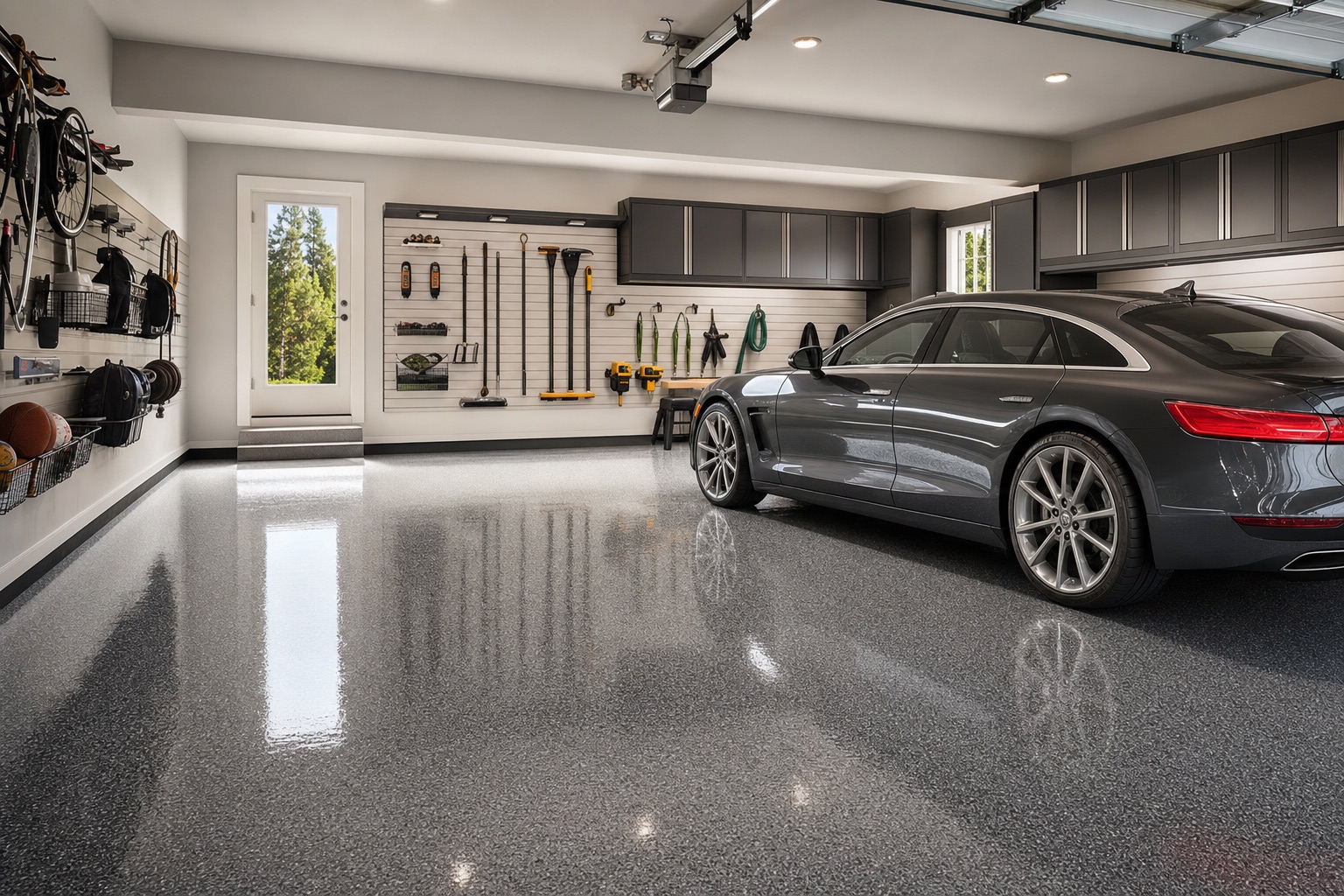
Pros and Cons of Epoxy Garage Floors
A balanced, installer-honest look at the real pros and cons of epoxy garage floors — and how each con gets solved in an Illinois garage.
Honest quote in about 24 hours. No pressure.
Local crew · Diamond-grind prep · Workmanship warranty
Epoxy garage floors offer big pros — a 15–20+ year lifespan, salt and oil resistance, easy cleaning, and a bright finish. The cons are real too: it can be slippery when wet (fixable with flake or quartz), demands proper prep, and costs more upfront than paint. For most Illinois garages the pros outweigh the cons. See garage floor epoxy in Naperville.
Updated June 2026Pros and Cons of Epoxy Garage Floors, Honestly
Epoxy is the most popular garage floor upgrade for a reason — but it is not magic, and a good installer will tell you the trade-offs straight. The pros are big: a properly built epoxy or epoxy-polyaspartic floor lasts 15–20+ years, shrugs off road salt, oil, and chemicals, wipes clean in seconds, and brightens a dark garage with a finished, custom look.
The cons are real but manageable: a plain gloss floor can be slippery when wet, the job depends entirely on proper prep, and it costs more upfront than a can of garage floor paint. The good news is every one of those cons has a known fix. Below we lay out both sides — then show exactly how we solve each downside in an Illinois garage.
Epoxy Garage Floor: Pros vs. Cons (and the Fix)
The honest list, side by side. Notice that every con has a known solution — most of them come down to prep and the right finish, not a flaw in epoxy itself.
| Pros | Cons (and the fix) |
|---|---|
| 15–20+ yr lifespan | Higher upfront than paint → lasts far longer per dollar |
| Resists salt, oil & chemicals | Slippery when wet → add flake or quartz for grip |
| Wipes clean, brightens the garage | Needs proper prep → pro diamond grinding, not acid wash |
| Custom colors & finishes | Cure / downtime → fast-cure polyaspartic option |
Lifespan and pricing ranges reflect typical real-world results, not a guarantee — every slab is different. For most Naperville garages we build the hybrid epoxy-and-polyaspartic system. See the full epoxy vs. polyaspartic breakdown.
The Real Pros: Durability, Salt Resistance & Easy Cleaning
Durability and salt/oil resistance. This is the headline. A diamond-ground epoxy floor with a UV-stable topcoat bonds into the slab and stands up to hot tires, dropped tools, road salt, motor oil, and freeze-thaw cycling. In an Illinois garage — where chloride gets tracked in all winter — that chemical resistance is the difference between a floor that looks new in a decade and a slab that pits and stains.
Easy cleaning and a brighter garage. A sealed epoxy surface has no pores for grime, oil, or salt to soak into, so it wipes or mops clean in seconds. The glossy finish also bounces light around, turning a dim, gray garage into a bright, finished space that feels more like a showroom than a storage room. For most homeowners that "wow" is half the reason they upgrade.
The Real Cons: Slipperiness, Prep & Upfront Cost
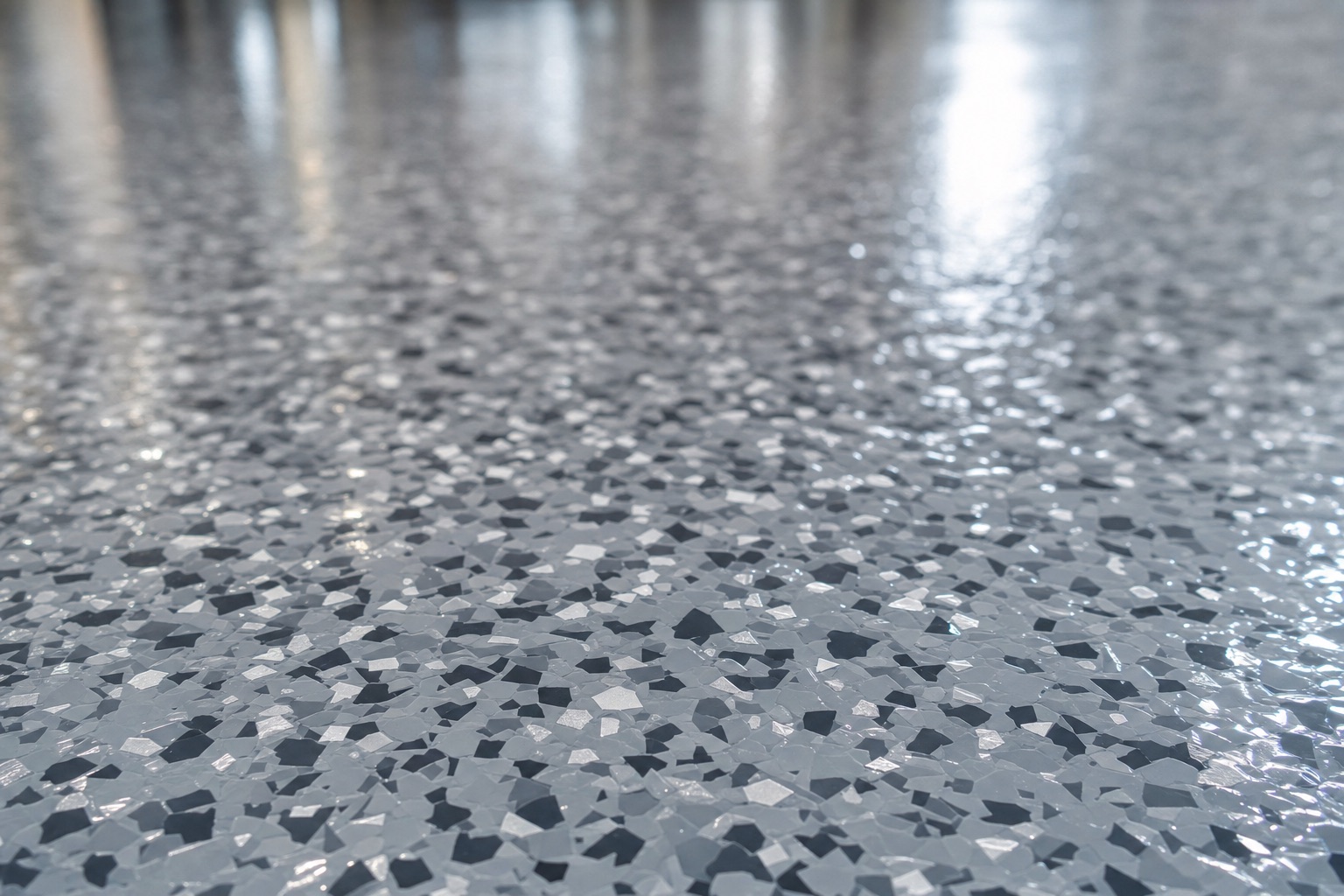
Slippery when wet (and the fix). A plain high-gloss coating can get slick when snow-melt or wet tires drip onto it — the single most-searched epoxy concern. The fix is simple: broadcasting decorative flake or a quartz aggregate into the coat adds texture and traction, and we can mix an anti-slip additive into the topcoat for problem zones. A flake floor is no slicker than wet tile.
Prep-dependent and a higher upfront cost. Epoxy only lasts when the concrete is mechanically diamond-ground first — skip that and even premium resin peels in a season. It also costs more upfront than a big-box paint kit. But that prep is exactly what buys the 15–20 year lifespan, so the price-per-year is far lower. See typical numbers in our typical epoxy floor cost guide.
How We Solve Each One
Are the Cons Dealbreakers? How We Solve Each
Short answer: no. Every common downside of epoxy comes down to product choice or prep — both of which a real installer controls. Here is how we handle each con on a Naperville garage.
Slippery → add flake or quartz
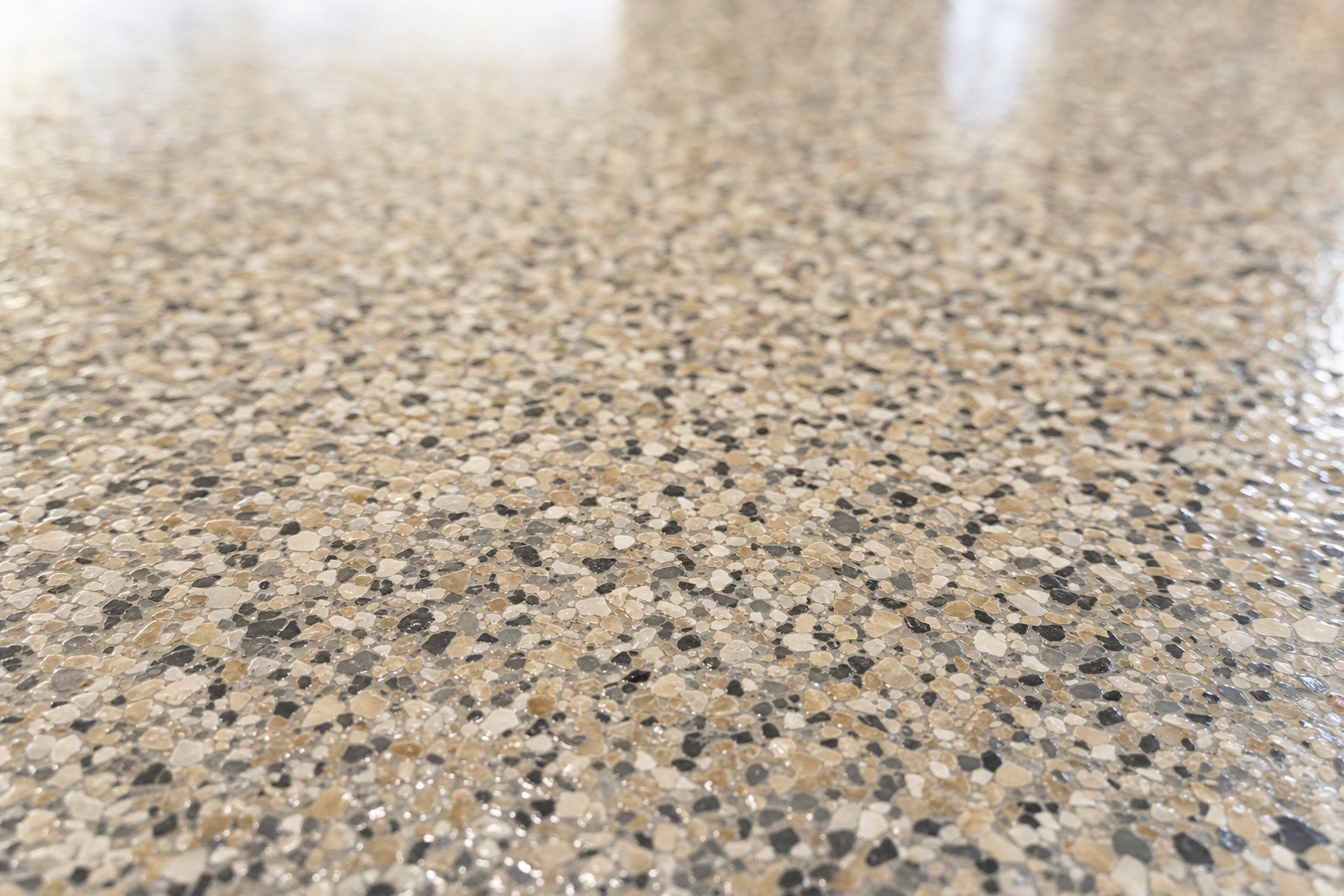
We broadcast decorative flake or a quartz aggregate into the coating for traction, and can add an anti-slip additive to the topcoat for wet, snow-melt, or entry zones.
Prep failure → diamond grinding
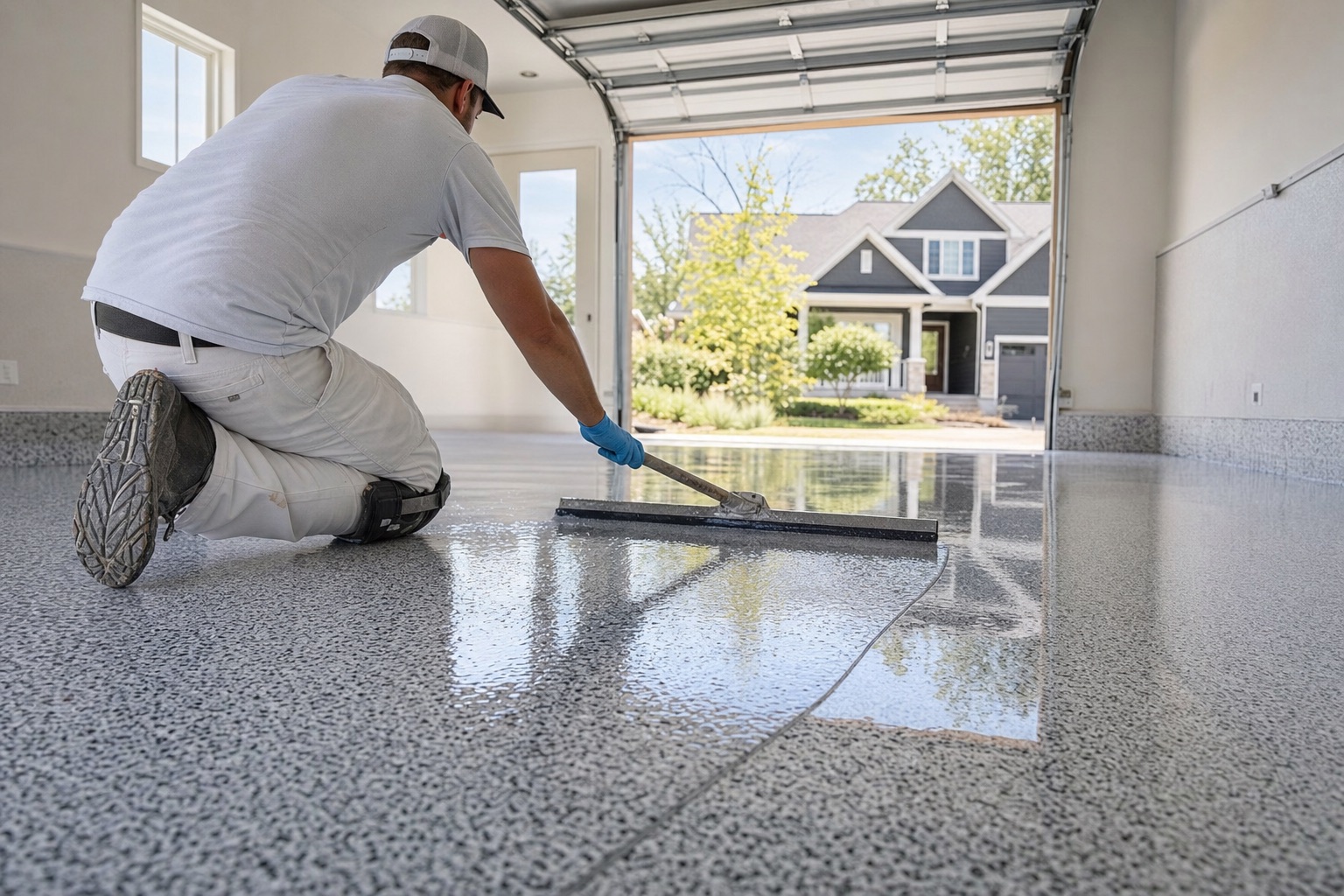
We mechanically diamond-grind every slab to an open profile instead of acid-washing. That mechanical bond is the single biggest reason a coating lasts instead of peeling.
Upfront cost → cost-per-year math
A pro floor costs more than paint today but lasts 15–20+ years instead of 1–3, so it costs far less per year. We give an honest, written number up front — no surprise add-ons.
Cure / downtime → fast-cure polyaspartic
A polyaspartic topcoat cures far faster than straight epoxy, so most installs finish in about a day and you can usually park again in roughly 72 hours.
Is Epoxy Right for Your Garage?
For the vast majority of Illinois garages, the pros win clearly. If you park a daily driver, deal with winter road salt, want an easy-clean surface, and plan to stay in the home a while, a diamond-ground epoxy-and-polyaspartic floor pays for itself in durability and looks. The cons — slipperiness, prep, cost, cure time — are all solved by choosing the right finish and a real installer.
Epoxy is a weaker fit only in narrow cases: a slab with an unresolved moisture or structural problem, or a strict short-term budget where paint is genuinely the only option this year. We moisture-test first and will tell you straight if your slab needs work before coating — no overselling. When the slab is sound, the math favors epoxy almost every time.
Keep Reading
More on choosing and caring for the right epoxy garage floor in the Illinois climate.
FAQ
Epoxy Garage Floor Pros & Cons FAQ
Free, No-Pressure Estimate
Get an Honest Estimate — Pros, Cons & All
Tell us about your garage and we'll send an honest, detailed estimate — usually within about 24 hours. We'll recommend the finish that gives you the pros without the cons.
(630) 326-6456 · Open 7 days · 8am–5pm
1750 W Ogden Ave, Naperville, IL 60540
Honest quote in about 24 hours. No pressure.
Local crew · Diamond-grind prep · Workmanship warranty