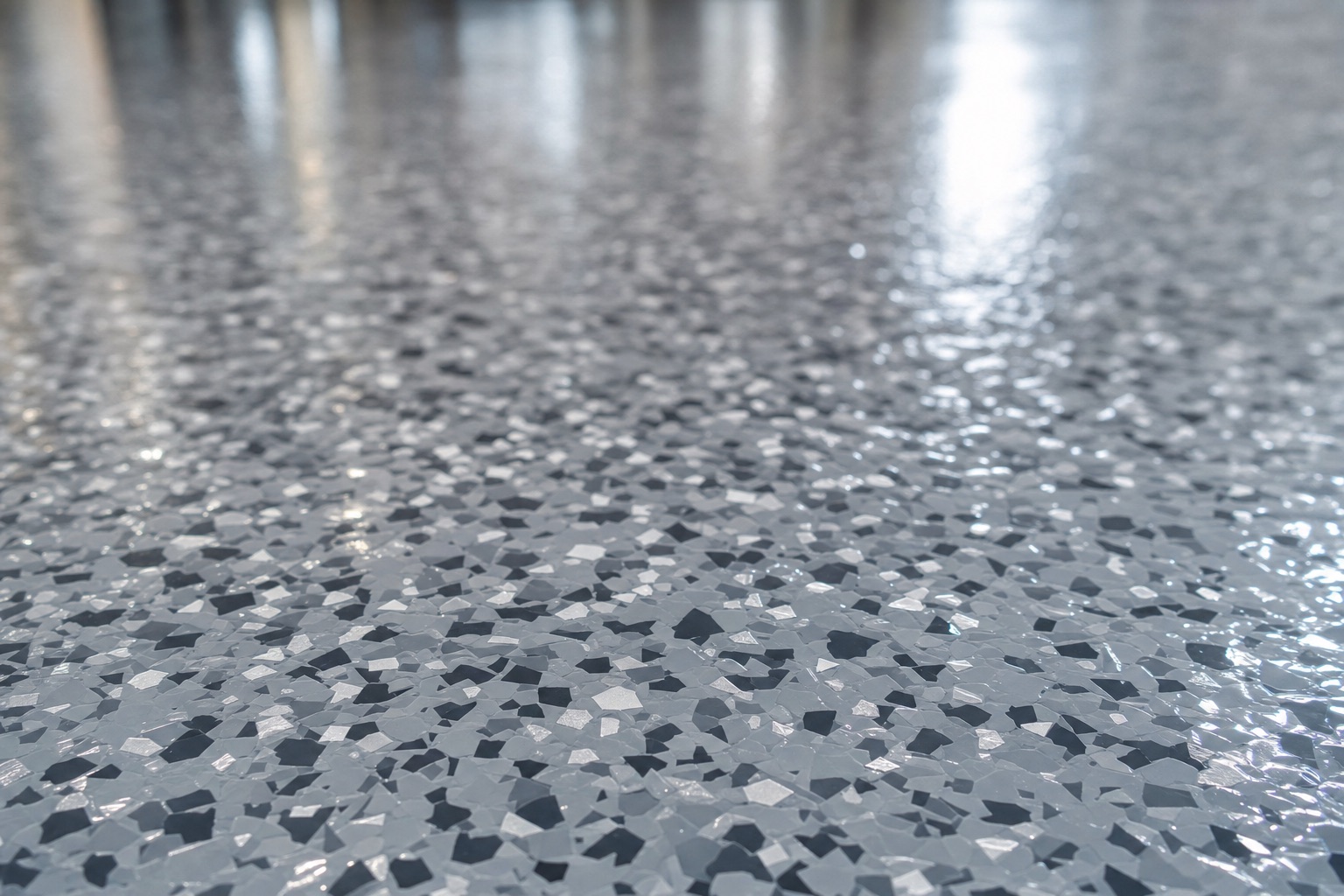
How to Clean and Maintain an Epoxy Garage Floor
Dust-mop weekly, mop with a pH-neutral cleaner monthly, and rinse road salt off fast in winter. A simple Illinois routine that keeps your finish glossy for years.
Honest quote in about 24 hours. No pressure.
Local crew · Diamond-grind prep · Workmanship warranty
Cleaning an epoxy garage floor is easy: dust-mop or soft-broom weekly, mop with a pH-neutral cleaner monthly, and rinse off road salt and snow-melt promptly in winter. Skip harsh acids and abrasive pads. This simple routine keeps an Illinois epoxy garage floor glossy and protected for its full 15–20+ year lifespan.
Updated June 2026How Do You Clean an Epoxy Garage Floor?
The good news: a quality epoxy garage floor is one of the easiest floors you will ever own. It is sealed and non-porous, so dirt, dust, salt, and most spills sit on top instead of soaking in — and wipe away with very little effort. There is no waxing, no sealing, and no scrubbing grout lines.
Day to day, all most Naperville floors need is a quick dust-mop or soft broom to clear grit, an occasional damp mop with a pH-neutral cleaner, and a fast rinse when winter road salt gets tracked in. Do those three simple things and a properly installed floor keeps its gloss and protection for its full 15–20+ year lifespan. The rest of this guide is just the details.

The Routine
The Simple Epoxy Floor Maintenance Routine
Six habits keep an epoxy garage floor looking new. None of them take more than a few minutes.
Weekly: Dust-Mop or Soft-Broom
Sweep or dust-mop to clear sand, grit, and road dust. Loose grit is the one thing that can scratch a glossy finish underfoot or under tires — clearing it is the single most valuable habit.
Monthly: Mop with a pH-Neutral Cleaner
Damp-mop with warm water and a pH-neutral floor cleaner (a little dish soap works too). Rinse and let it air-dry. That is all it takes to bring the shine back.
Winter (IL): Rinse Road Salt Promptly
Don't let road salt and snow-melt sit. Mop or hose the white film off when it builds up — chloride residue is the main thing working against an Illinois garage floor.
Spills: Wipe Oil & Chemicals Quickly
The coating resists oil, antifreeze, and most chemicals, but the sooner you wipe a spill, the easier it is. Spot-clean greasy spots with a mild degreaser, then rinse.
Avoid: Acids & Abrasives
Keep acidic or citrus cleaners, steel wool, and abrasive scrub pads off the floor. They can dull or haze the topcoat. A soft mop or soft-bristle brush is all you ever need.
Every Few Years: Ask About a Recoat
After years of hard use, a fresh maintenance topcoat can restore full gloss without a full redo. See how recoats and overall floor cost work below.
Your Epoxy Floor Cleaning Schedule at a Glance
The whole routine on one page. Pin it in the garage — that is genuinely all the upkeep a quality coating needs.
| How often | What to do | Why it matters |
|---|---|---|
| Weekly | Dust-mop or soft-broom | Clears grit before it scratches |
| Monthly | Damp-mop, pH-neutral cleaner | Restores gloss, lifts grime |
| Winter, as needed | Rinse off road salt fast | Stops chloride haze & buildup |
| Right away | Wipe oil & chemical spills | Keeps stains from setting |
| Every few years | Maintenance recoat (optional) | Refreshes gloss without a redo |
Never use acids, citrus cleaners, steel wool, or abrasive pads — they are the fastest way to dull an otherwise bulletproof finish.
Why Road Salt Is the Illinois Winter Enemy
If there is one thing that ages a Chicagoland garage floor, it is road salt. Every winter, tires track in chloride-laden slush that pools, dries, and leaves a chalky white film. On bare or poorly coated concrete, that chloride soaks in and pits the slab. On a quality epoxy coating it cannot penetrate — but if you let it sit all season, the salty residue still dulls the gloss and can be a nuisance to clear later.
The fix is simple and it is all about timing: rinse it off before it dries and accumulates. When you see the white film building up, mop or hose it down with warm water and a pH-neutral cleaner. A stubborn salt haze comes off with a 50/50 warm-water-and-white-vinegar wipe followed by a clean-water rinse. Keep up with it through the winter and your floor looks the same in April as it did in October.
pH-Neutral Cleaners: What to Use and What to Avoid
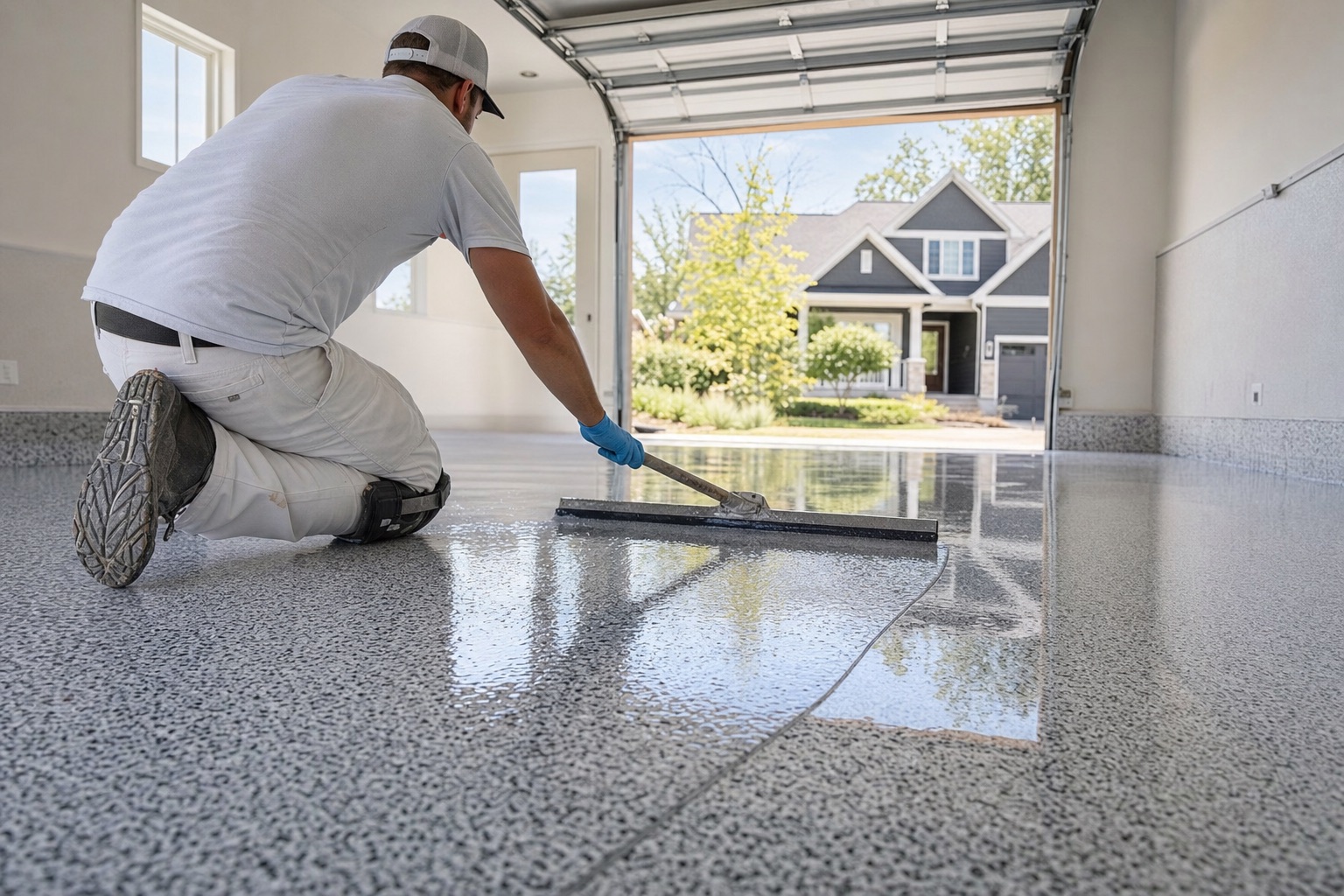
You do not need a cabinet full of specialty products. The best everyday cleaner for an epoxy floor is a pH-neutral floor cleaner mixed with warm water — it cuts dirt and grime without touching the gloss. A few drops of dish soap in warm water does the same job for routine mopping, and a mild degreaser handles oily spots. That is the entire shopping list.
What to keep off the floor matters more. Avoid acidic and citrus cleaners (including vinegar at full strength for daily use), solvent-heavy or harsh chemical strippers, and anything abrasive — steel wool, scouring powders, and stiff scrub pads. Those are what slowly haze, etch, or soften a topcoat. Stick to a soft mop or soft-bristle brush and the finish stays showroom-clean for years.
Removing Tough Stains: Oil, Rust & Tire Marks
A sealed epoxy floor resists staining far better than bare concrete, so most "stains" are really just residue sitting on top. Here is how to clear the usual garage culprits:
Oil & grease: wipe fresh drips up quickly, then clean the spot with warm water and a mild degreaser and rinse. The coating will not absorb the oil, so there is no permanent mark — just surface film to lift.
Rust: from a bike kickstand, jack, or wet tool, gently work it with warm soapy water and a soft brush; a little extra dwell time usually does it. Skip acidic rust removers, which can dull the finish.
Tire marks: hot-tire pickup or scuffing wipes off with warm water and a pH-neutral cleaner, or a mild degreaser for stubborn black marks — never an abrasive pad. A quality polyaspartic topcoat resists this in the first place.
When to Consider a Maintenance Recoat
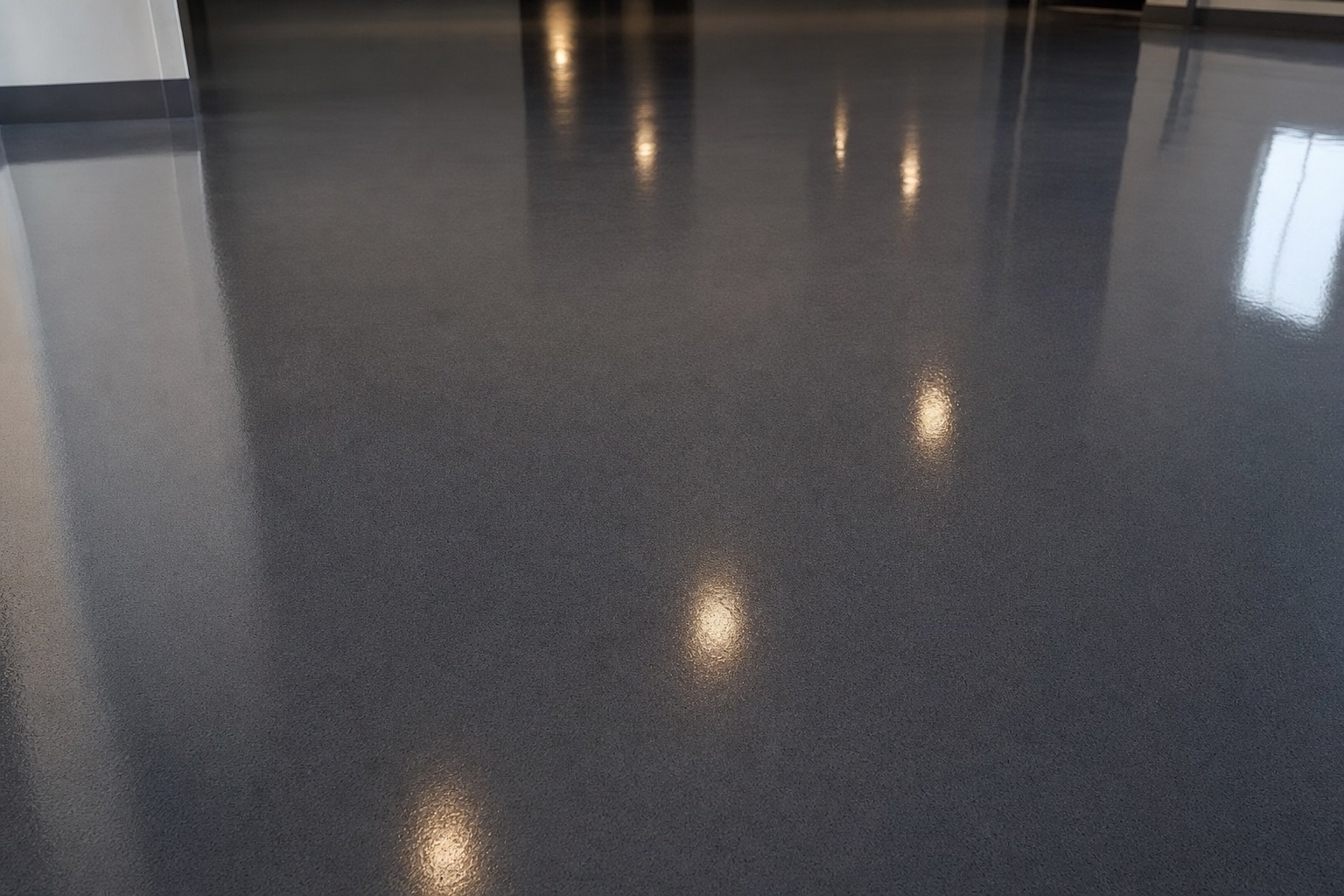
A well-installed floor does not "wear out" the way paint does — but after many years of hard daily use, even the best topcoat slowly loses a little of its original mirror gloss. When that day comes, you usually do not need to tear anything out. A maintenance recoat — a light scuff-sand of the existing surface and a fresh topcoat — restores full gloss and adds years of protection at a fraction of a full rebuild.
Signs it might be time: the shine has gone flat across high-traffic lanes, or you see fine surface wear where you walk and park most. If you are not sure, ask at your next estimate. Curious what a recoat or a new floor runs in the area? See honest market ranges on our recoat and epoxy floor cost guide — every number ends at a free, exact quote.
Keep Reading
More on getting the most life and value out of your Naperville epoxy floor.
FAQ
Epoxy Floor Cleaning & Maintenance FAQ
Free, No-Pressure Estimate
Want a Floor That Practically Cleans Itself?
Whether you need a new epoxy garage floor or a maintenance recoat on an aging one, tell us about your space and we will send an honest, written estimate — usually within about 24 hours.
(630) 326-6456 · Open 7 days · 8am–5pm
1750 W Ogden Ave, Naperville, IL 60540
Honest quote in about 24 hours. No pressure.
Local crew · Diamond-grind prep · Workmanship warranty